lorethursdayのTwitterイラスト検索結果。 61ページ目


One of my favourite bits of writing #DogRoseDirt was adapting the already fairly weird brothers Grimm stories - like The Three Snake Leaves, which includes a princess who stipulates that when she dies, her beloved must be buried alive #FolkloreThursday https://t.co/oicPMaKxAp


Greuceanu is one of the oldest tales of written Romanian folklore, the protagonist having to set the sun and moon free from Zmei (archetypical devil/dragon like villains). #FolkloreThursday
Old stamp of Greuceanu (from the collection of folk tales compiled by Petre Ispirescu)


Tatterhood is born to her queen mother riding on a goat & holding a wooden spoon. She goes on to save her sister from trolls & more. #FolkloreThursday #NationalStorytellingWeek2021 #trolls #norway #norwegian #fairytale
#legend #myth #girlpower #princess #princesses
Art: unknown

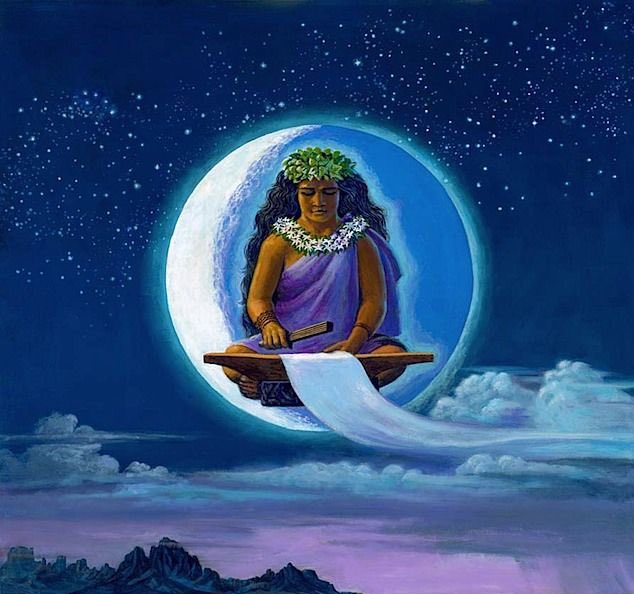
#FolkloreThursday
In Hawaii, a myth describes how the moon came to be called Mahina. The deity Hina, tired of weaving kapa cloth, scaled a rainbow to the Sun, but it was too hot. She then climbed to the Moon, and, pleased, made it her home. “Mahina” is derived from her name.


Great tales have been told of the highly bearish Bödvar Bjarki for hundreds of years. He and Beowulf both had connections to Götaland and might originally have been kin or even one and the same. #FolkloreThursday 🖼 Louis Moe


Would you kiss a frog to find your prince? Don't worry! In the original Grimm version of the tale, the frog's curse breaks when it's thrown against a wall.
@FolkloreThurs
#FolkloreThursday
#FairyTale
#ThursdayThoughts
#watercolor
#Watercolour
#Illustration
#Thursday


Little Briar-Rose is the Grimm’s version of Sleeping Beauty, published in 1812. Briar-rose is also known as the wild rose & has thorns that form hooks, just like the hedge that grows around Briar-Rose’s castle for 100 years until the prince arrives. #FolkloreThursday Img: CMB


thread of #folklore & #fairytale #film #reviews for #storytellingweek @FolkloreThurs
2 reworked by #Italian #horror maestro Mario Bava :
KILL, BABY… KILL! (1966) https://t.co/3VzKV01bS7
MASK OF SATAN (1960) https://t.co/A710dAkJfw
@frameratedUK #Cinema & #FolkloreThursday


‘Little Ida’s Flowers’ is the tale of a young girl who discovers her flowers are wilting because they exhausted themselves dancing at a magical ball. It is one of Hans Christian Andersen’s first fairytales, published 8th May 1835. It mentions 17 types of flower. #FolkloreThursday


The very first Cinderella tale was actually recorded around AD 850 in China. She was known as Yehhsien. Her shoes were made of gold and she wore a dress that was made of kingfisher feathers.
#FolkloreThursday


An English tale tells of a baker’s daughter who used a tiny bit of dough when baking for the poor. When she put the loaf in the oven it expanded massively. She was so surprised she said ‘hoo hoo’ and turned into an owl as a warning to be generous to the poor. #FolkloreThursday


Oisín, son of Fionn, went off to Tír na nÓg (Land of Youth) for 300 years - he thought it was only 3. He returned but was warned not to get off his steed. He fell off the horse & on hitting the ground turned into a withered old man.
#FolkloreThursday
https://t.co/7zrNZuAoGu


#folklorethursday I like a bit of gore in my folklore so here is the Beast of Gévaudan - let's preserve our wolves and foxes and live with wild beasts among us - they won't attack us but scarey stories are good too #NationalStorytellingWeek

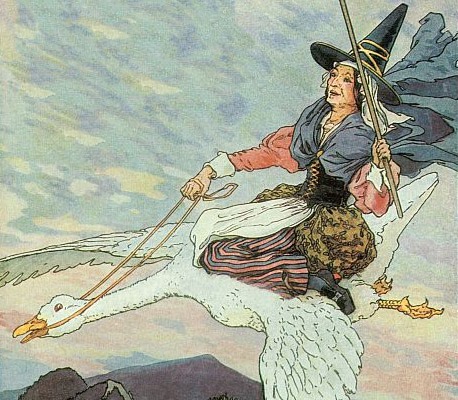
Mother Goose is an imaginary teller of #fairytales & rhymes. Part witch-figure, her fame grew with Perrault's Tales (1695) including Cinderella & Sleeping Beauty.
Representing an ancient line of female storytellers, her origins have been lost
(🎨F Richardson) #FolkloreThursday

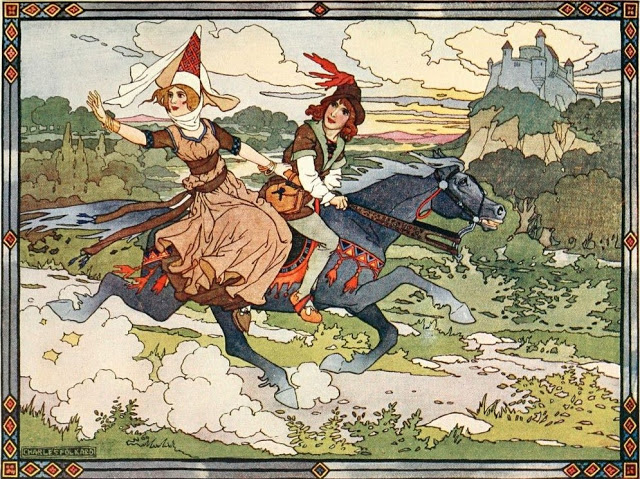
One of my favourite fairy tales is 'The Mastermaid' collected by Asbjørnsen & Moe. I've put a hint of broad Yorkshire into this light retelling to bring out the northerness. See if you can hear it! And the Mastermaid herself is a marvel. https://t.co/tbyk194bjR #FolkloreThursday


The King of the Golden River, by John Ruskin (1841). 3 brothers are tasked by a kingly dwarf to deliver 3 drops of holy water to create a river of gold. Only the good brother succeeds as he puts others’ needs above his own. Illust: Arthur Rackham 1932 edition. #FolkloreThursday


Another one of my favorite #Tales is 'The Emperor's New Clothes.' Where a pompous King believes he is parading around the finest material; invisible to all who are stupid or incompetent. When actually, he is the naked fool.#FolkloreThursday #NationalStorytellingWeek2021


#FolkloreThursday
In Scottish and Irish legends, Selkies are mythological beings (the tales tend to centre around females) that changed from seal to human form by shedding their skin. My absolute favourite embodiment of this myth has to be Song of the Sea 💙


Gwyllion are a type of Welsh mountain fairy. They are described as hag-like creatures who cause unsuspecting travellers to become lost whilst travelling through the mountainous regions. Pulling a knife out of the pocket was a method of banishing the Gwyllion #FolkloreThursday


#FolkloreThursday
Mad as a Hatter a term used in 1800's England, when factories used mercury in the production of felt,to weigh the hat down. Factory workers exposed too often to the metal developed mercury poisoning, which induced a type of dementia, or “mad hatter,' symptom.