light-yearsのTwitterイラスト検索結果。 209 件中 8ページ目


576 - Gothitelle
Type: Psychic
Starry skies thousands of light-years away are visible in the space distorted by their intense psychic power.
#Gen5


NGC 6995: The Bat Nebula
The name NGC 6995 was assigned to a specific region of the Eastern Veil Nebula.
The Veil #Nebula itself is a large #supernova remnant, located about 2,400 light-years away in the constellation #Cygnus.
➡️https://t.co/sW46u7nMEP
#Space
#SpaceHour


The left pillar of the Pillars of Creation is around 4 light-years tall (37,844,000,000,000 kilometers)
Credit: NASA/JPL/Hubble Space Telescope

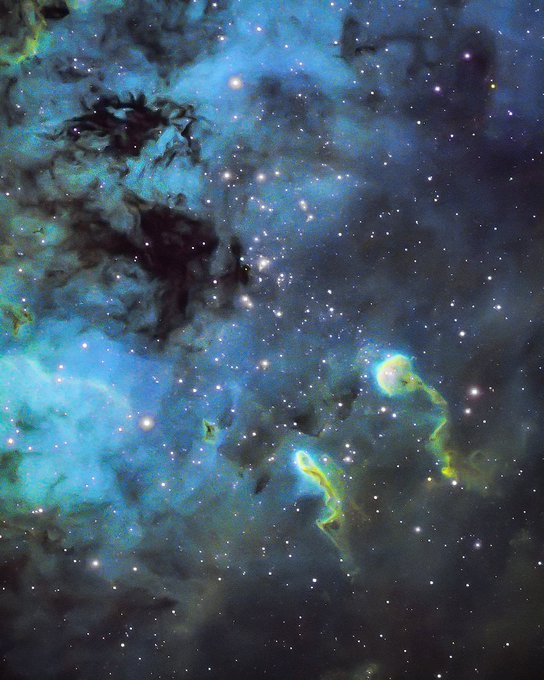
I took this picture of the "Tadpole Nebula" last year using my telescope in the backyard.
This is an active star forming region that lies 12,000 light-years away in the constellation Auriga.
#Astrophotography

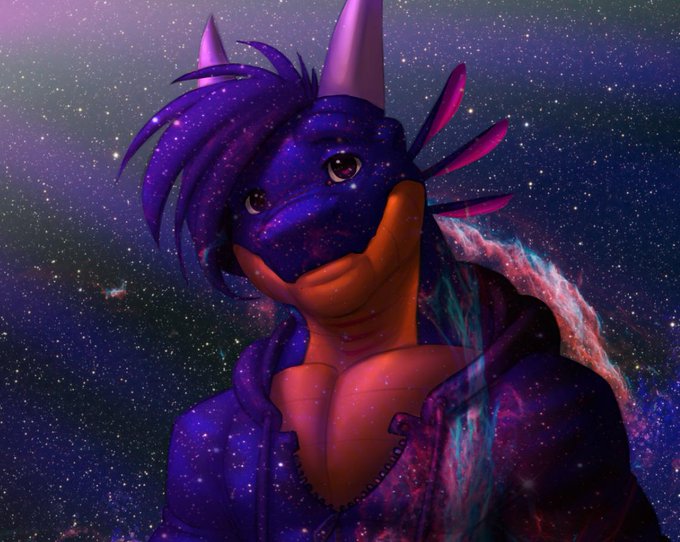


NGC 5643 Spiral Galaxy. Gas falling into a central massive Black Hole 55 million light-years away (Nasa.Arch)🔭⭐️

Heart of Orion Nebula : 4 massive stars & a Black Hole (Trapezium) 1,500 light-years away (apod.nasa.Archive) 🚀🔭⭐️

576 - Gothitelle
Type: Psychic
Starry skies thousands of light-years away are visible in the space distorted by their intense psychic power.
#Gen5


The intricate structure of the colorful Lagoon Nebula. This vast stellar nursery is located about four thousand light-years away. It is being sculpted by radiation and powerful winds from the young, massive star Herschel 36, which has a mass exceeding thirty solar masses.

576 - Gothitelle
Type: Psychic
Starry skies thousands of light-years away are visible in the space distorted by their intense psychic power.
#Gen5

The Elephant’s Trunk Nebula. IC 1396, Young Star Cluster 3,000 light-years away in Cepheus (apod.nasa.Archive) 🚀🔭⭐️


57 light-years away, a giant pink exoplanet orbits a star like our Sun, but bigger. GJ 504b is one of the lowest-mass planets we know of: If we had a big enough bathtub, it would float.
Explore it & other Strange New Worlds: https://t.co/jYjOEE0lyq


The Flame Nebula stands out in this optical image of the dusty, crowded star forming regions toward Orion's belt, a mere 1,400 light-years away. Click on the link and explore it by swiping the cursor https://t.co/FjvmwxXbeW
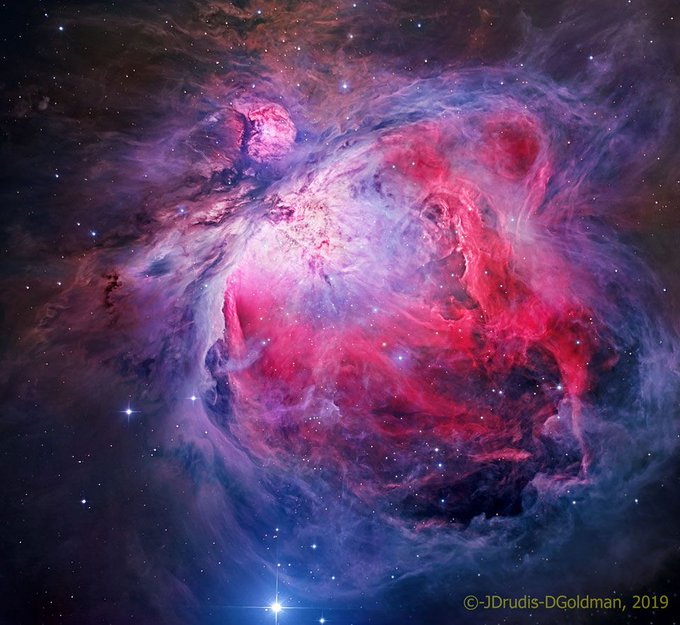
The Great Nebula in Orion, an immense, nearby starbirth region, is probably the most famous of all astronomical nebulas. Here, glowing gas surrounds hot young stars at the edge of an immense interstellar molecular cloud only 1500 light-years away https://t.co/9lSo0HaKXh

576 - Gothitelle
Type: Psychic
Starry skies thousands of light-years away are visible in the space distorted by their intense psychic power.
#Gen5


Stars “...I remember the fact that it is millions of light-years away from us, we are looking at its past and it doesn't exist anymore and I always end up feeling, what if we both are made up of the dust of the same star we are staring at.”
― Akshay Vasu
Audrey Kawasaki on wood


31.9 light-years away, an M dwarf called AU Microscopii – AU Mic for short – is actively flaring with the energy of a fiery young star. Scientists just discovered a planet bathed in these blasts. Get the poster based on real science: https://t.co/5yQFBVhm2O


A Hubble Space Telescope image of the edge of a giant gaseous cavity within the star-forming region called NGC 3324. NGC 3324 is in the constellation Carina, about 7,200 light-years away from Earth. Image credit: NASA, ESA, and The Hubble Heritage Team (STScI/AURA) #hubble


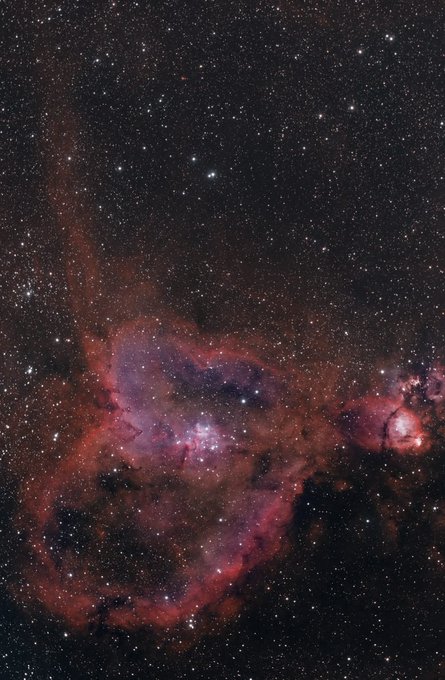
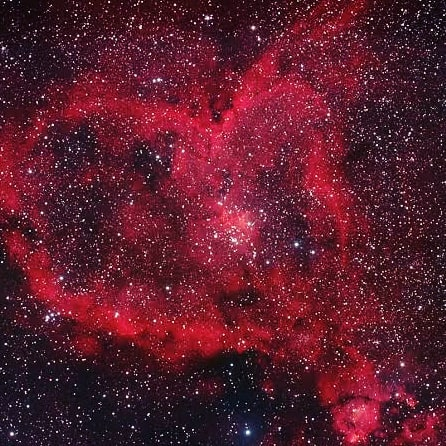
Heart nebula (IC 1805) looks like a human heart. It is 7,500 light-years from Earth & is home to very young supergiant hot stars, about 1.5 million years old & with a mass almost 50 times that of the Sun, in addition to many other smaller stars.
#Astrophysics #Physics #Astronomy


seungjoon • january 13
On January 13 in 2011
Andromeda Galaxy
Over 100 million stars are on display in this portion of the Andromeda galaxy, located over 2 million light-years away. This portrait of our galactic neighbor is the largest image yet assembled by Hubble.