NowOnViewのTwitterイラスト検索結果。 2ページ目


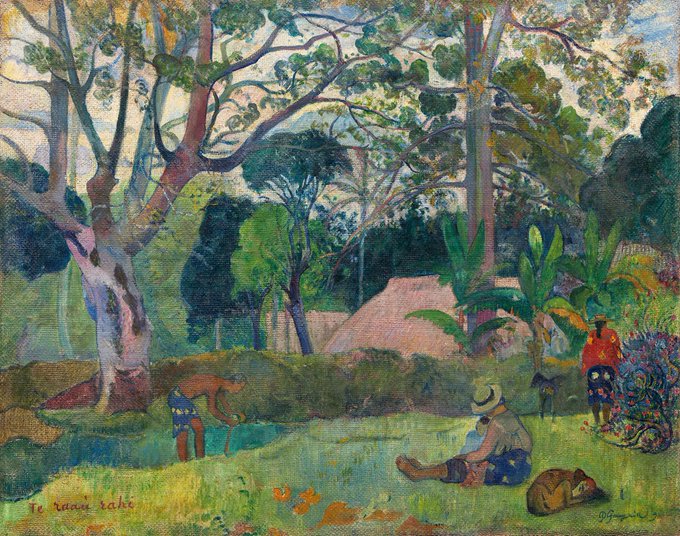
“It is so small a thing, the life of a man, and yet there is time to do great things, fragments of a common task.” —Paul Gauguin, born #OnThisDay in 1848
See 12 works by Gauguin #NowOnView and explore over 200 more in the Art Institute's collection: https://t.co/QsZ12ZIg8R


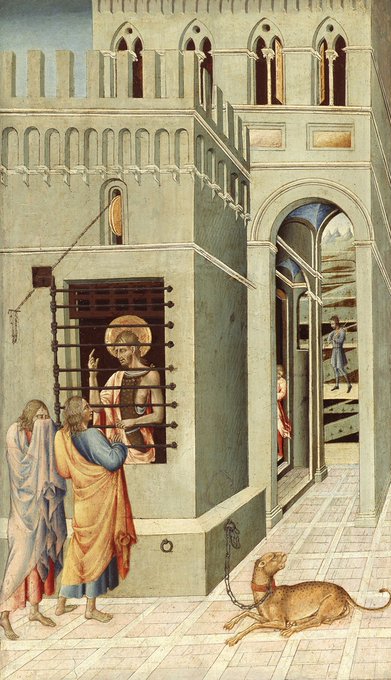
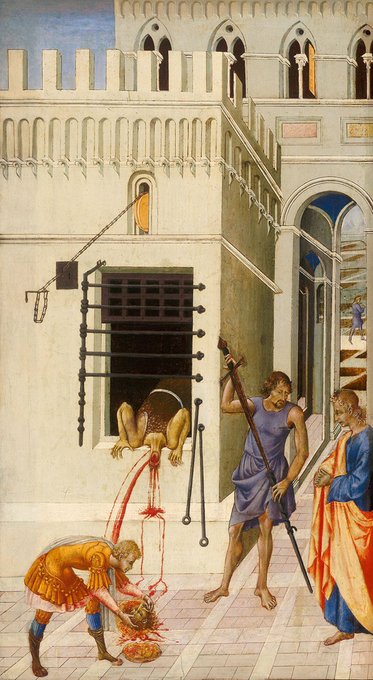
Giovanni di Paolo worked within the conservative artistic tradition of Siena in 15th-century Italy, creating rich patterns and an intensely devotional mood in his paintings.
Among his finest works are these six panels depicting the life of Saint John the Baptist. #NowOnView

One of Paul Delvaux's most ambitious paintings, “The Awakening of the Forest” draws thematic inspiration from Jules Verne. It also shows the dramatic and lasting effect Surrealists like Salvador Dalí and René Magritte had on Delvaux's work in the late 1930s. #NowOnView
(©ARS)
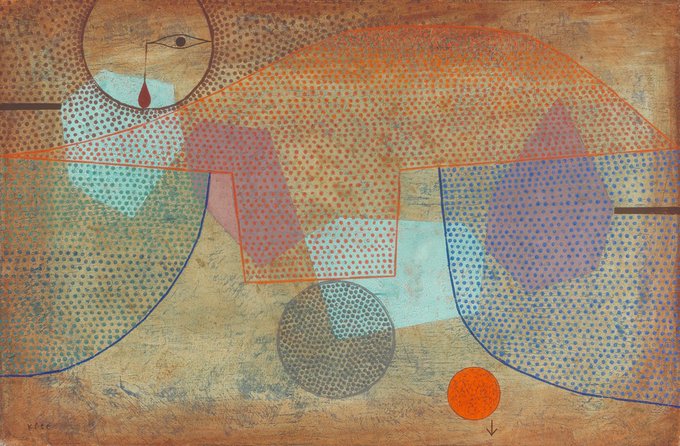
Paul Klee was an artist, musician, and teacher at the Bauhaus. He looked to music to develop his ideas about the "polyphony” of painting—the sensational effects of layered formal elements—to create an art that “does not reproduce the visible, but makes visible.” #NowOnView
[©ARS]

Born #OnThisDay—Willem de Kooning was a central figure in Abstract Expressionism. Aptly titled, "Excavation" reflects his technically accomplished painting process: an intensive building up and scraping down of paint layers until the desired effect is achieved. #NowOnView
[©ARS]

Archibald Motley’s “Nightlife" depicts a crowded cabaret in the South Side neighborhood of Bronzeville.
The dynamic composition and heightened colors vividly express the liveliness of the scene, making it one of the Chicago painter's most celebrated paintings. #NowOnView


NEW ACQUISITION—These two striking creatures are the result of a collaboration between sculptor Emmanuel Frémiet and the stoneware manufactory Emile Muller et Cie. To create these imaginary beasts, Frémiet drew on medieval imagery and his lifelong zoological studies. #NowOnView
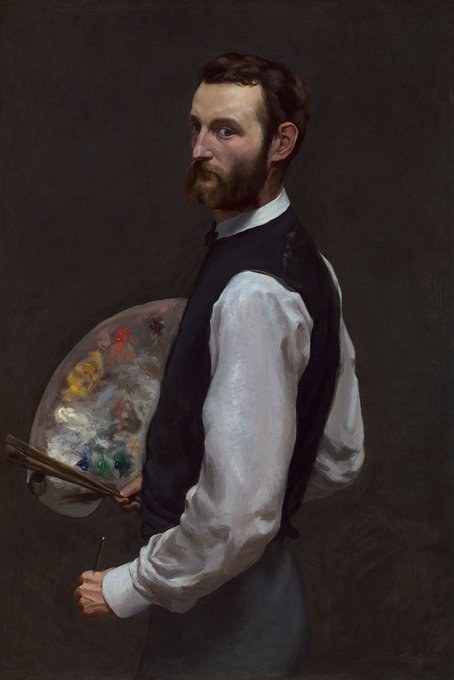
Frédéric Bazille was in his mid-20s when he executed this startlingly direct self-portrait.
He painted it while sharing an apartment with Claude Monet. Given his recent decision to abandon a medical career in favor of art, it can be seen as a professional manifesto.
#NowOnView


August Macke painted "Geraniums before Blue Mountain" in 1910. The observation of nature was important to him, as was the study of art and creating from his own individual inner experience.
#NowOnView “Franz Marc and August Macke: 1909-1914”
[Credit: @MilwaukeeArt]

#NowOnView | “Gustav Klimt and Egon Schiele: 1918 Centenary” |This exhibition marks the 100th anniversary of the passing of two of the greatest Austrian artists of the 20th c. Stop by before it comes to an end on January 21.
–
Egon Schiele, “Friendship,” 1913. Private Collection.

Leonora Carrington’s imaginative portrait of her friend—self-taught artist Juan Soriano—was one of the first paintings in which she combined Surrealist-inspired dreamscapes with the history and ancient practices of Mexico, her adopted homeland—#NowOnView in Modern Art.
[©ARS]


Charles M. Russell, the self-proclaimed cowboy artist, was a prolific artist of Indian subjects. This painting "Indian Canoe Party" demonstrates his preferred style for depicting Native subjects in a romanticized manner. #NowOnView

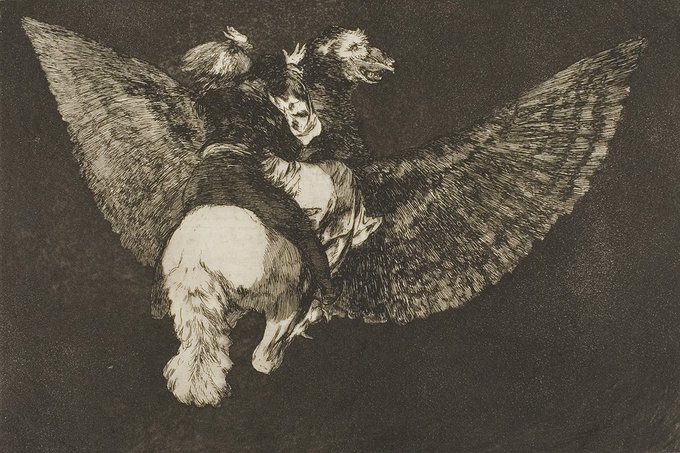


Toward the end of his life, Francisco de Goya created some of his most mysterious imagery, considering themes of superstition and the fantastical nature of dreams and nightmares.
See monstrous demons, winged creatures, demonic cats, and other frightful beasts by Goya. #NowOnView
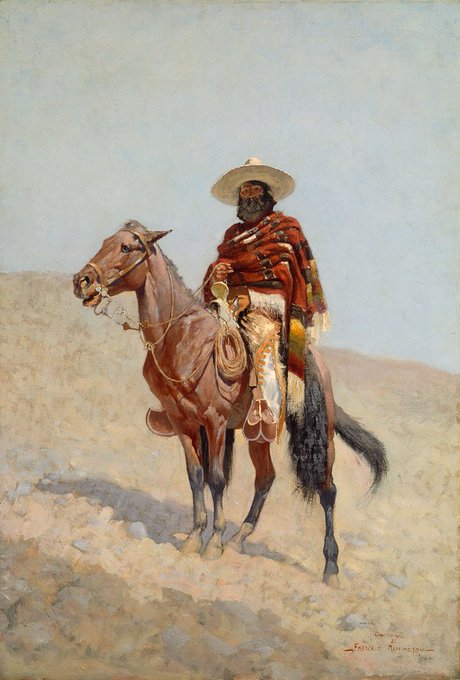


Born #OnThisDay in 1861—Frederic Remington helped shape and reinforce myths of the Old West at a time when the open range was disappearing.
Explore his mythical, romantic evocations of cowboys, American Indians, and soldiers—with six works #NowOnView in American Art.

“The Key” by Jackson Pollock marks a crucial moment in his evolution as an artist. Created on the floor and worked on directly from all sides, this quasi-Surrealist painting prefigured Pollock’s celebrated drip paintings, which debuted the following year. #NowOnView
[©ARS]

Born #OnThisDay—Théodore Géricault painted this macabre image directly from life. A frequent visitor to morgues, he often brought home cadavers for his studies. The severed head in this work is one that Géricault is said to have kept in his house for a fortnight. #NowOnView

Edvard Munch painted "The Girl by the Window" the same year as his most famous work, "The Scream." The loosely applied, somber brown tones mingle with violets and blues in this unsettling and enigmatic scene, evoking a feeling of melancholy and anticipation. #NowOnView

In Édouard Manet’s "Steamboat Leaving Boulogne," a side-wheel packet steamer heads up the channel, leaving slower sailing boats in its wake.
See this boldly brushed and almost calligraphic canvas among ten works by Manet #NowOnView.
EXPLORE—https://t.co/fnA0YdWZMm


Born #OnThisDay in 1880—The first American painter to experiment with pure abstraction, Arthur Dove dispensed with representational subjects, creating patterns, rhythms, and color harmonies in order to communicate through form and color alone.
See five works #NowOnView.

Born #OnThisDay—Lyonel Feininger moved to the US when the Nazis declared his work “degenerate.” "Carnival in Arcueil” is among roughly fifty works the artist entrusted to a friend before leaving the country. They remained unknown until rediscovered in 1985. #NowOnView
[©ARS]