OnViewのTwitterイラスト検索結果。 15ページ目


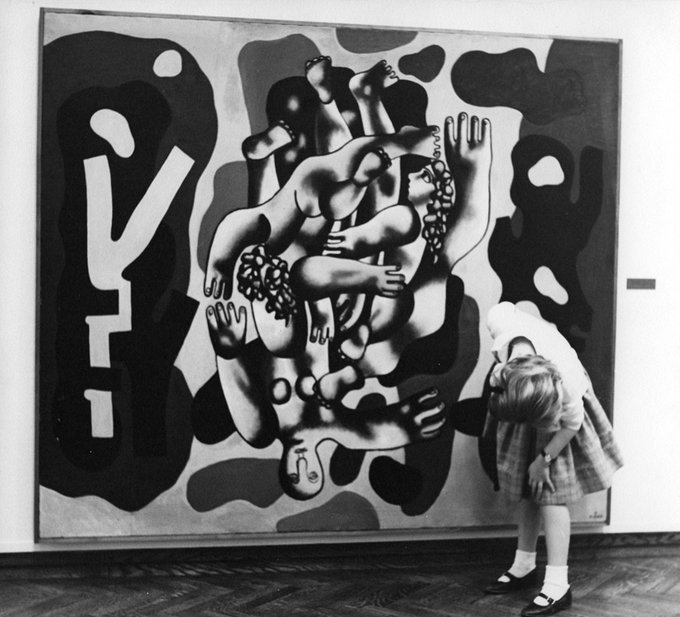
Long committed to ideals of social equality, Fernand Léger sought to reconcile modern art with the demands of a mass audience. He turned to the motif of the human figure, using organic forms inspired by the natural world.
See "Divers on a Yellow Background" #NowOnView
[©ARS]
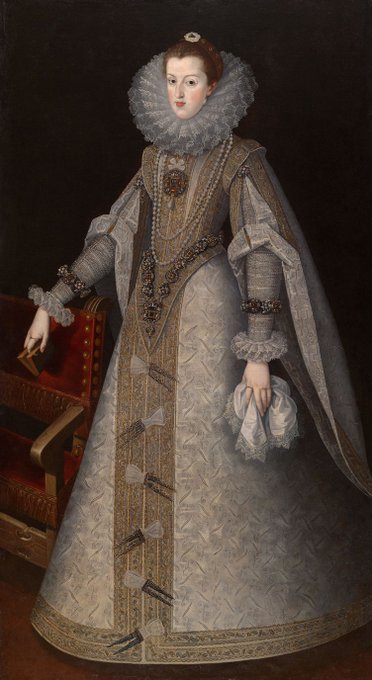
Margaret of Austria, wife of King Philip III of Spain, stands resplendently dressed, her royal authority conveyed through her sumptuous attire. The large brooch she wears was part of the Spanish crown jewels for several centuries, appearing in numerous royal portraits. #NowOnView


Going to see the ocean this summer? If not, you can always find it in our galleries! 🌊 https://t.co/HZdEOpKQ3E #winslowhomer #onview

The precise meaning of this roundel showing lovers in a garden is unclear, but the fire-breathing dragon was surely a warning.
Glass panels with moralizing and biblical scenes were particularly popular in fine houses of northern Europe—#NowOnView in Medieval and Renaissance Art.

"Is there a more mysterious idea," Franz Marc asked, "than to imagine how nature is reflected in the eyes of animals?"
In "The Bewitched Mill" four birds and a small horse resembling origami animals merge with a cascading stream that turns a waterwheel—#NowOnView in Modern Art.


#NewOnView: sixteen works by #ArthurConanDoyle's father, Charles Altamont Doyle, on display in the #HuntingtonArtGallery. Often dismissed as the work of a madman, Doyle painted these fanciful watercolors during a stay at Montrose Royal Lunatic Asylum. https://t.co/EAijACGtFm


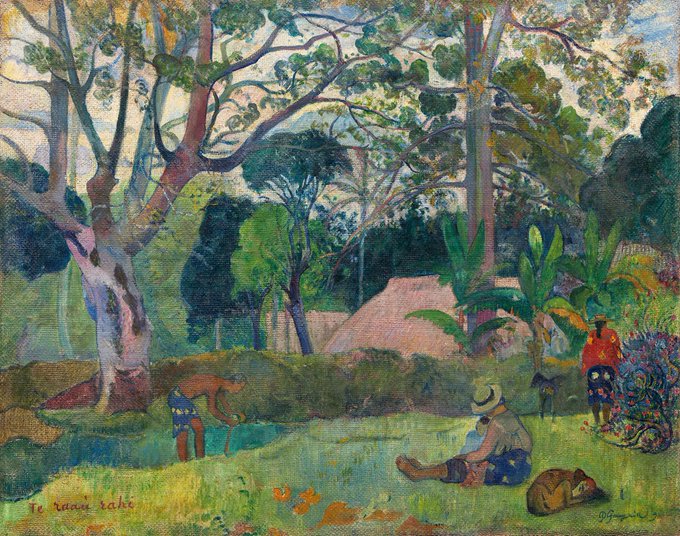
“It is so small a thing, the life of a man, and yet there is time to do great things, fragments of a common task.” —Paul Gauguin, born #OnThisDay in 1848
See 12 works by Gauguin #NowOnView and explore over 200 more in the Art Institute's collection: https://t.co/QsZ12ZIg8R


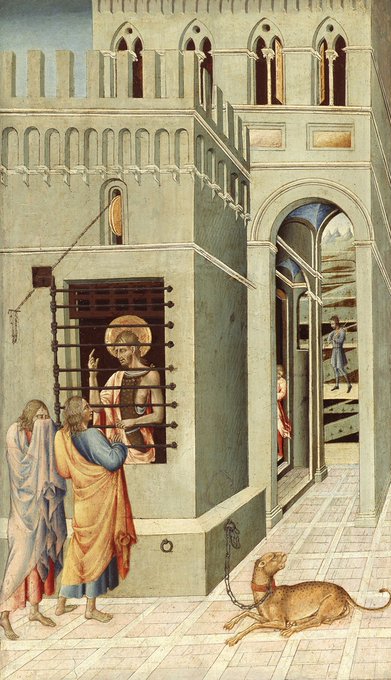
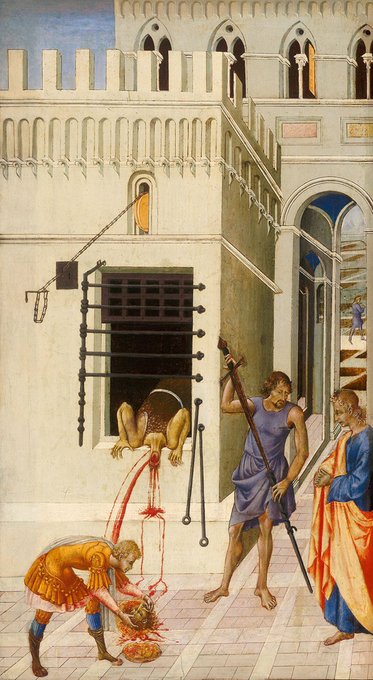
Giovanni di Paolo worked within the conservative artistic tradition of Siena in 15th-century Italy, creating rich patterns and an intensely devotional mood in his paintings.
Among his finest works are these six panels depicting the life of Saint John the Baptist. #NowOnView

Just three days until the opening of Renoir: The Body, The Senses! Learn more about the exhibition, #onview at the Clark June 8 through Sept. 22: https://t.co/i3WYoXQVyV #RenoirBodySenses

One of Paul Delvaux's most ambitious paintings, “The Awakening of the Forest” draws thematic inspiration from Jules Verne. It also shows the dramatic and lasting effect Surrealists like Salvador Dalí and René Magritte had on Delvaux's work in the late 1930s. #NowOnView
(©ARS)
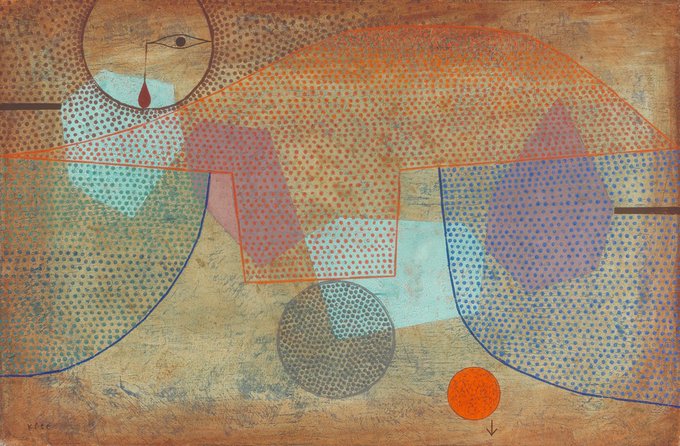
Paul Klee was an artist, musician, and teacher at the Bauhaus. He looked to music to develop his ideas about the "polyphony” of painting—the sensational effects of layered formal elements—to create an art that “does not reproduce the visible, but makes visible.” #NowOnView
[©ARS]

Born #OnThisDay—Willem de Kooning was a central figure in Abstract Expressionism. Aptly titled, "Excavation" reflects his technically accomplished painting process: an intensive building up and scraping down of paint layers until the desired effect is achieved. #NowOnView
[©ARS]

The Clark is open today from 10 am to 5 pm! https://t.co/kpQwRU7pL9 #happyeaster #onview

Monet experimented with technique in this early seascape, applying paint in broad strokes, sometimes with a palette knife. While many of Monet’s seascapes are sunlit scenes, this painting emphasizes dark skies, deep shadows, and choppy waves. #Onview now: https://t.co/3sX12oVHTv


Archibald Motley’s “Nightlife" depicts a crowded cabaret in the South Side neighborhood of Bronzeville.
The dynamic composition and heightened colors vividly express the liveliness of the scene, making it one of the Chicago painter's most celebrated paintings. #NowOnView


NEW ACQUISITION—These two striking creatures are the result of a collaboration between sculptor Emmanuel Frémiet and the stoneware manufactory Emile Muller et Cie. To create these imaginary beasts, Frémiet drew on medieval imagery and his lifelong zoological studies. #NowOnView
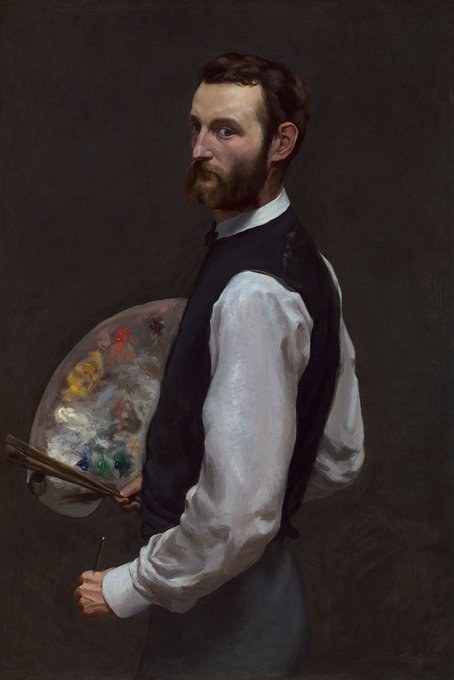
Frédéric Bazille was in his mid-20s when he executed this startlingly direct self-portrait.
He painted it while sharing an apartment with Claude Monet. Given his recent decision to abandon a medical career in favor of art, it can be seen as a professional manifesto.
#NowOnView


August Macke painted "Geraniums before Blue Mountain" in 1910. The observation of nature was important to him, as was the study of art and creating from his own individual inner experience.
#NowOnView “Franz Marc and August Macke: 1909-1914”
[Credit: @MilwaukeeArt]