vanityのTwitterイラスト検索結果。 17ページ目


The Hon Sir John Mellorm by Leslie Ward - Vanity Fair, 24 May 1873
He was an English judge and Member of Parliament. He was one of three judges at the 188-day long trial in 1873 of Arthur Orton, the Tichborne claimant.

Thomas Emerson Headlam, by Leslie Ward - Vanity Fair, 19 April 1873
He was an English barrister and politician, who became judge advocate-general.

Edward Levy-Lawson, by Leslie Ward - Vanity Fair, 22 March 1873
He was an English newspaper proprietor. He was the owner and publisher of The Daily Telegraph.

Thomas Mayne Reid, by James Tissot - Vanity Fair, 8 March 1873
He was an Irish-American novelist, who fought in the Mexican-American War (1846–1848).

Richard Owen - Published in Vanity Fair, 1. March 1873
He was an English biologist, comparative anatomist and palaeontologist. Owen is generally considered to have been an outstanding naturalist with a remarkable gift for interpreting fossils.

Robert Wigram Crawford, by Melchiorre Delfico - Vanity Fair, 11 January 1873
He was a British East India merchant, Governor of the Bank of England, and a Liberal Party politician who sat in the House of Commons from 1857 to 1874.

Léon Gambetta, by Charles Auguste Loye - Published in Vanity Fair, 19 October 1872
He was a French lawyer and republican politician who proclaimed the French Third Republic in 1870 and played a prominent role in its early government.

The Rev. Thomas Binney, by "Montbard" - Vanity Fair, 12 October 1872
He was an English Congregationalist divine, popularly known as the "Archbishop of Nonconformity". He was noted for involvement in the cause of anti-slavery.

Edward Pleydell-Bouverie, by "Lyall" - Vanity Fair, 27 July 1872
He was a British Liberal politician. He was a member of Lord Palmerston's first administration as Paymaster-General and Vice-President of the Board of Trade, and as President of the Poor Law Board.

Michael Costa, by "Lyall" - Published in Vanity Fair, 6 July 1872
He was an Italian-born conductor and composer who achieved success in England.
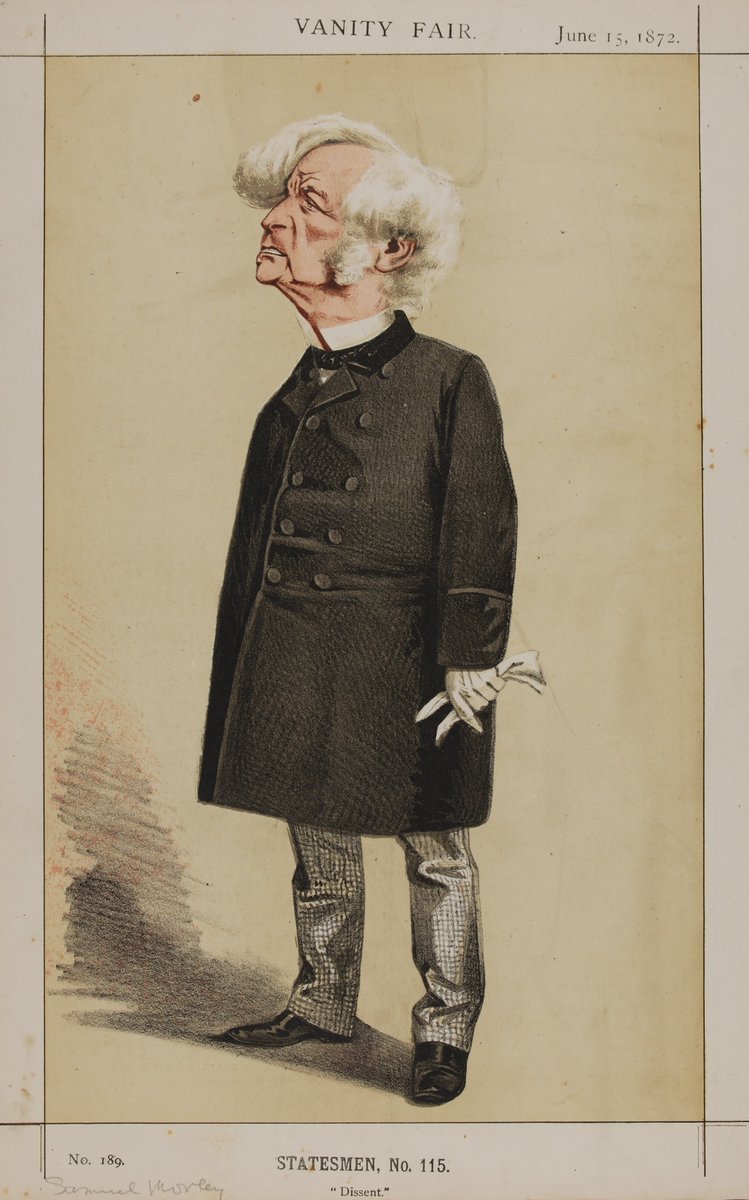
Samuel Morley, by Adriano Cecioni - Vanity Fair, 15 June 1872
He was an English woollen manufacturer and political radical. He is known as a philanthropist, Congregationalist dissenter, abolitionist, and statesman.

Gathorne Hardy, by Adriano Cecioni - Vanity Fair, 20 April 1872
He was a prominent British Conservative politician, a moderate, middle-of-the road Anglican.
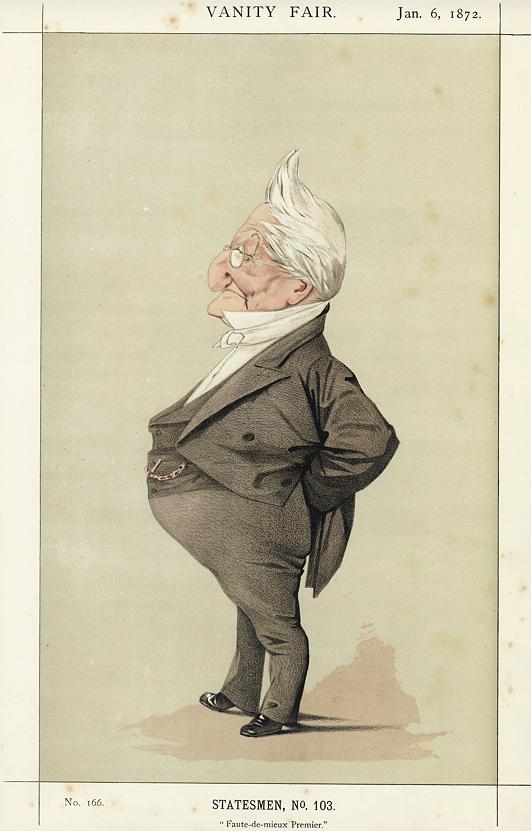
Marie Joseph Louis Adolphe Thiers, by Adriano Cecioni - Published in Vanity Fair, 6 January 1872
He was a French statesman and historian. He was the second elected President of France and first President of the French Third Republic.

John Locke, by James Tissot - Vanity Fair, 1871
English barrister, author and Liberal Party politician. He was mainly active in causes for the working class and local government, introducing a bill that give witnesses in criminal cases the right to affirm as in civil cases.

Alfred Tennyson, by Carlo Pellegrini - Vanity Fair, 22 July 1871
He was an English poet. He was the Poet Laureate during much of Queen Victoria's reign.

Sir John George Shaw-Lefevre, by Carlo Pellegrini - Vanity Fair, 1 July 1871
He was a British barrister, Whig politician and civil servant.
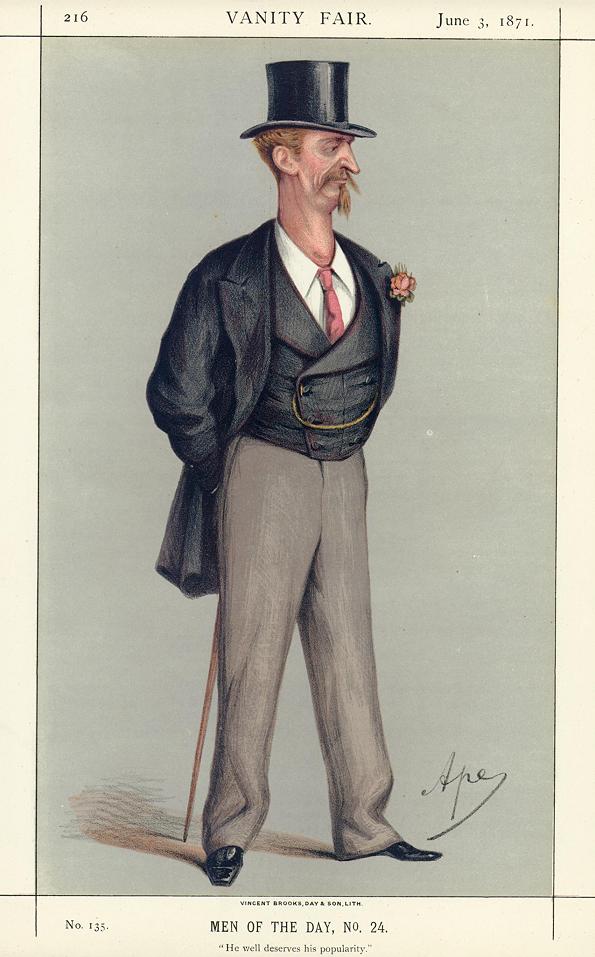
Eyre Massey Shaw, by Carlo Pellegrini - Published in Vanity Fair, 3 June 1871
He was the 1st Chief Officer of the Metropolitan Fire Brigade (now renamed the London Fire Brigade), and the Superintendent of its predecessor, the London Fire Engine Establishment, from 1861 to 1891.

Sir Francis Grant, by Carlo Pellegrini - Published in Vanity Fair, 29 April 1871
He was a Scottish portrait painter who painted Queen Victoria and many distinguished British aristocratic and political figures. He served as President of the Royal Academy.
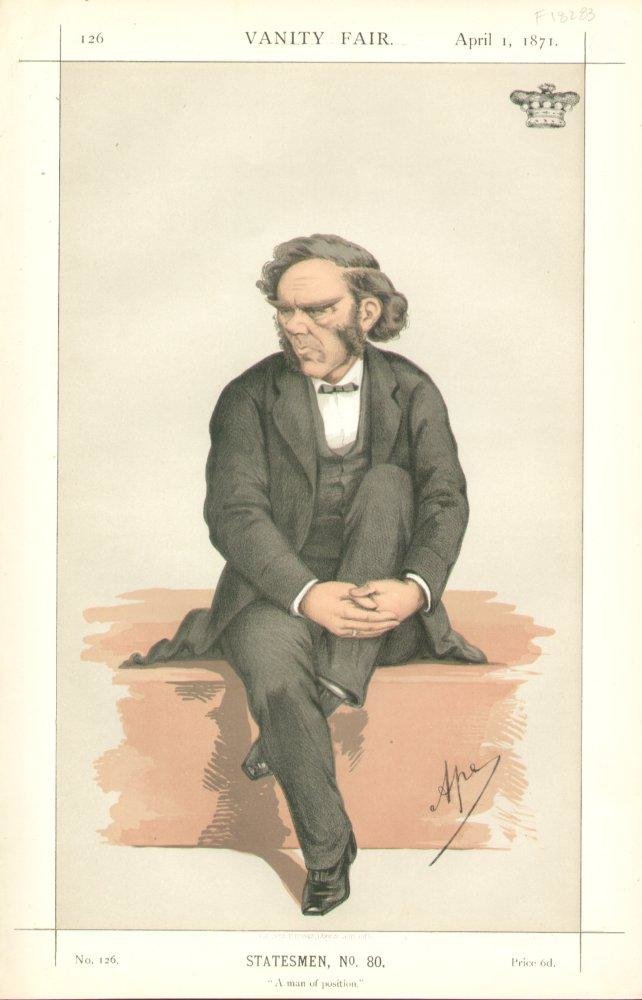
George Lyttelton, 4th Baron Lyttelton, by Carlo Pellegrini - Vanity Fair, 1 April 1871
He was an English aristocrat and Conservative politician from the Lyttelton family. He was chairman of the Canterbury Association, which encouraged British settlers to move to New Zealand.

The Rt Hon GW Hunt, by Carlo Pellegrini - Vanity Fair, 11 March 1871
Known in later life as 'Jingo' Hunt, he was an English writer of music hall songs, best known for "MacDermott's War Song" also known as the "Jingo Song".