mioceneのTwitterイラスト検索結果。 147 件中 3ページ目


The ailurines are the third group of ailurids that appeared in Middle Miocene epoch. The earliest members were raccoon-like omnivores that were found in North America, Eurasia and Africa. Only the genus Ailurus, the #RedPanda is the sole extant member of Ailuridae with 2 species.


I switched the human out here for a Pliobates, a gibbon relative from the Miocene of Spain, without a large tree nearby it's going low to not get the attention of the Deinotherium near by.


Xenokeryx amidalae, “Amidala’s strange horn”, lived in what is now Spain during the Miocene around 16mya. It’s most well known for it’s four bizarre ossicones, including a unique T-shaped structure near the back of the skull.
#marchofthemammals2022


New Miocene vultures Gypaetus georgii and Neophron lolis: https://t.co/48Vk4SDTVb #birds #dinosaurs


[#Geodiversitas] Skeleton of Early Miocene Bathyergoides neotertiarus Stromer, 1923 (Rodentia, Mammalia) from Namibia: behavioural implications
🔗 https://t.co/KvvYeyTHGs
✒️ Laura BENTO DA COSTA & BRIGITTE SENUT
#FossilFriday #Miocene #Rodentia #Mammalia #Paleontology


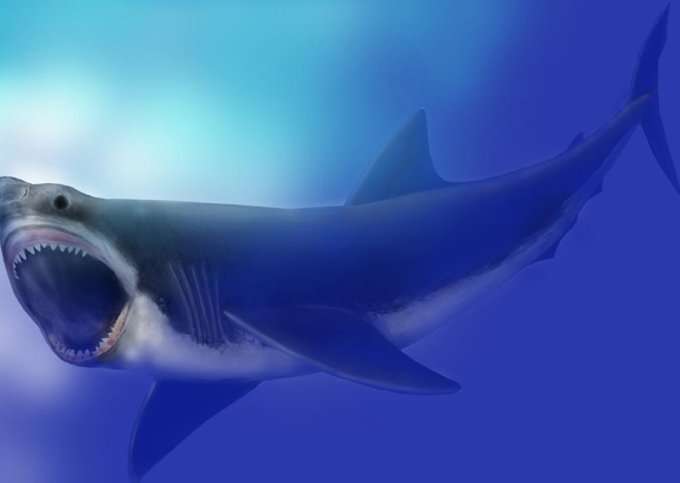
South American Pacific coast during the Late Miocene. A large Otodus megalodon approaches a pod of Odobenocetops leptodon, a tusked cetacean, and a group of the large penguin Spheniscus urbinai


In 2011, a giant salamander from the Miocene of what is now the Grytsiv locality of Ukraine was given the name "Ukrainurus hypsognathus". The authors of the paper note that despite it having relatively inflexible jaws, it wouldve had in incredible bite force!
#IStandWithUkraine


New: @mickbisconti et al. – Archaebalaenoptera eusebioi, a new rorqual from the late Miocene of Peru (Cetacea, Mysticeti, Balaenopteridae) and its impact in reconstructing body size evolution, ecomorphology and palaeobiogeography of Balaenopteridae https://t.co/hltarxk0vx


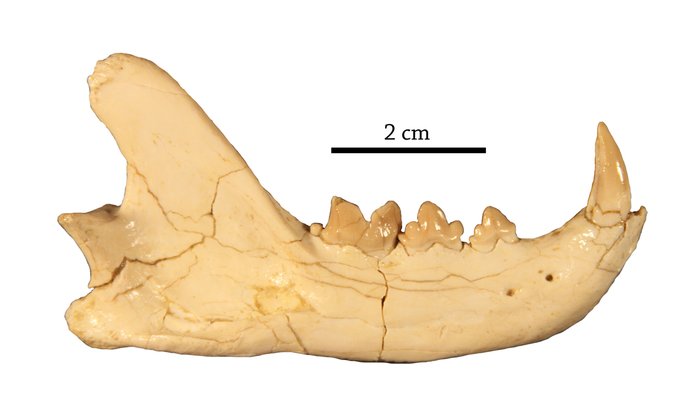
For #FossilFriday this awesome mandible of the feline Styriofelis from the Middle #Miocene site of Príncipe Pío-2 (#Madrid) studied by @Gamarraptor on his Master Thesis #Palaeontology #Felidae @Gemmula @MAntonPaleoart

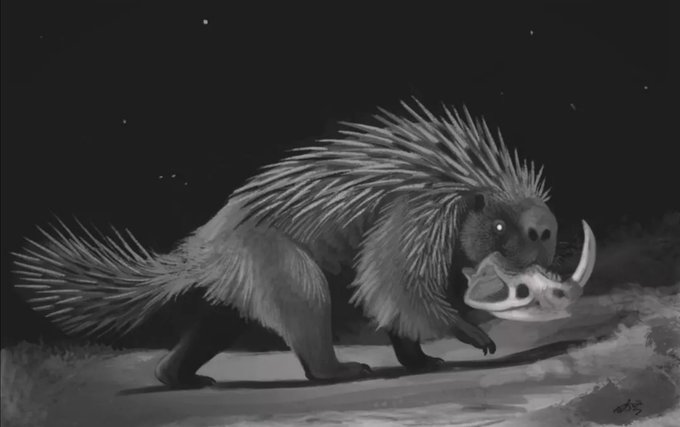
Another prehistoric creature I have never seen drawings of, the giant Miocene porcupine Neosteiromys from South America! It was largely terrestrial and in the same size range as living African porcupine! Here seen carrying a nice skull to gnaw on for dental health and minerals :B


Rimasuchus seems to have bit off more than they can chew, Zygolophodon is not happy. Early Miocene Egypt #paleoart


Preparing the 3D print models for #AgateContest! Reminder, to win one of these you have to create an artwork depicting miocene nebraska and submit online with this hashtag before January first!

New: Vera, Scarano & Reguero – A new Interatheriinae (Mammalia, Notoungulata) from the Cerro Boleadoras Formation (Santa Cruz, Argentina) and the evolution of the tarsus within the lineage during the Miocene https://t.co/DB3huHvCvd

New Miocene stiff-tailed duck, Manuherikia primadividua: https://t.co/iaD75nY4YY #birds #dinosaurs


As a last point, sad no doubt to some, it must be pointed out that Bullockornis, the 'Demon Duck of Doom', died out in the Miocene, and thus many millions of years before any human set foot on Australia.

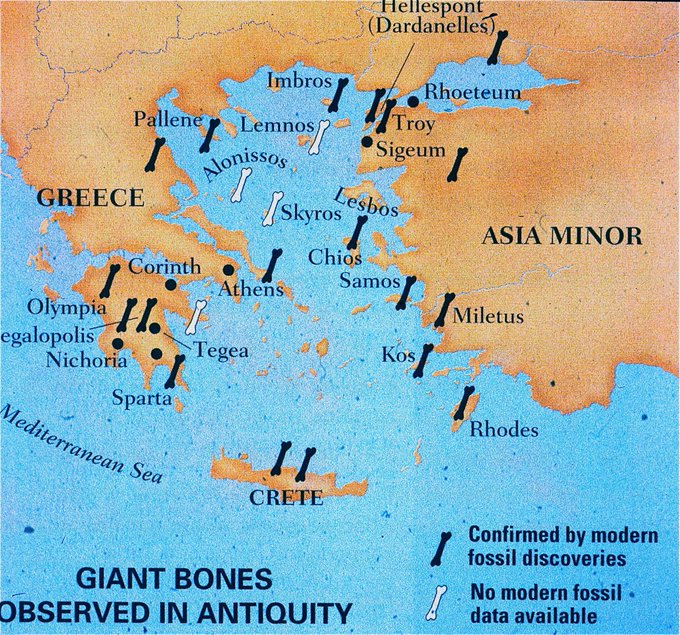
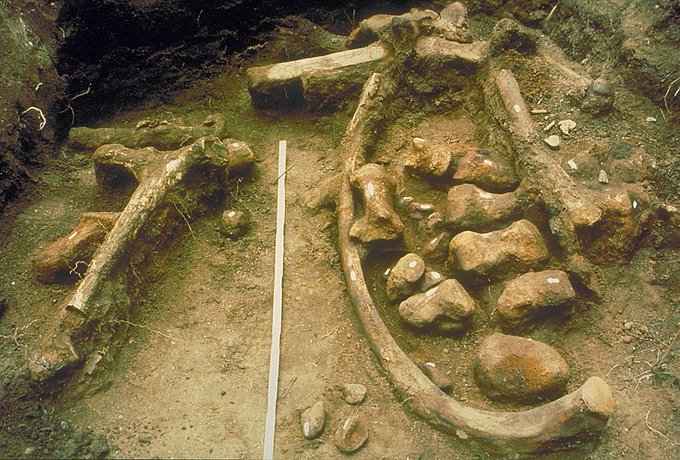

How did ancient Greeks interpret large, unfamiliar Miocene-Pleistocene fossils around the Aegean?
#FossilFriday


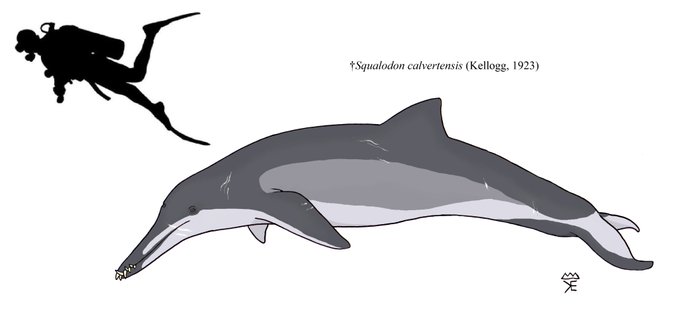
A pair of Paleoart reconstructions: Telmasaurus and Squalodon.
Telmasaurus was a medium sized basal Varanoid (a stem-Monitor lizard if you will) from the Late Cretaceous Flaming Cliffs of Mongolia. Squalodon is a macropredatory Platanistoid whale from the Oligocene and Miocene.


Painted a macroraptorial sperm whale mother (Zygophyseter varolai) swimming peacefully along a seagrass bed as her calf takes a nap on top of her sometime during the late Miocene.
#FossilFriday


Nature definitely did some experimentation as to what it wanted out of small toothed cetaceans. This is the somewhat river dolphin-adjacent Eurhinodelphis, a species that would've likely used its long rostrum for prey capture as depicted. The Miocene was an incredibly weird time.