lorethursdayのTwitterイラスト検索結果。 25ページ目


Today's #FolkloreThursday theme is Villains and Antiheroes to celebrate Krampusnacht! For those who don't know, Krampus is a Christmas being in Alpine folklore sent to punish wicked children 🎄
Art by Nathan Spoor and Adrian Valdez


In Polish lore, Turoń is a bovine creature who visits houses during a Yuletide festival. He playfully causes havoc in the home and is given alcohol in exchange for the fertility he bestows on inhabitants via a poke of his horn.
🎨 Michal Adamiec
#FolkloreThursday #YuleFolklore


Folklore Thursday - Nidhogg. In Norse mythology, it's a dragon/serpent who gnaws at the root of the world tree, Tggdrasil.
#myths #norsemyths #dragons #legends #folklorethursday #writingcommunity


Y Ladi Wen is an apparition in Welsh mythology, she is commonly seen at Hollantide Calan Gaeaf. Often characterised as a terrifying ghost she is often evoked to warn children about bad behaviour #FolkloreThursday


Many characters who are cast as villains simply expose the weaknesses in the relationships and values of the heroes in order to sow chaos, such as Eris with the golden apple. #FolkloreThursday


#FolkloreThursday theme today is villains so I thought I should bring up one of those tricky characters that acts as a villain and a hero? Efnisien; violent, emotional and prideful commits disturbing & horrifying atrocities but ultimately sacrifices himself in service to others.


Iron crone - in Belarusian folklore, is a terrible undersized toad-like old woman, with an iron tits and an iron hook, with which she grabs naughty children. Lives in old wells, in fields and vegetable gardens.
#FolkloreThursday


The most ancient of trees, the #Yew symbolises death & #Saturn, but also the rebirth of light at the #WinterSolstice. It is Old Magic, dark dreams, otherworld journeys & connection to ancestors. It is perseverance leading to transformation & renewal. #FolkloreThursday Img: CMB

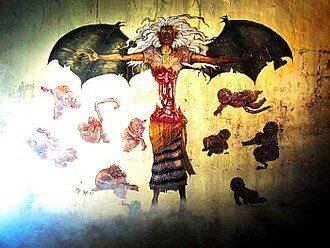
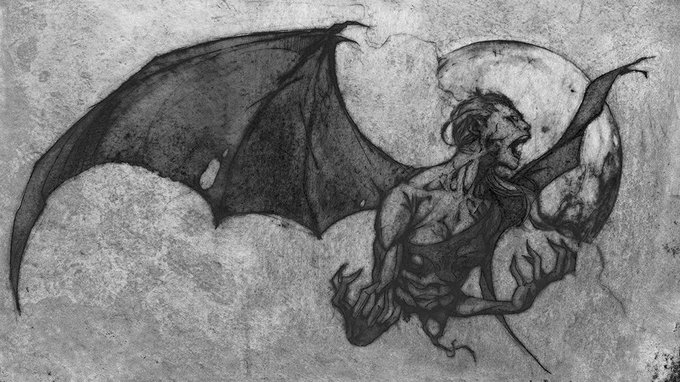

Aswang is a creature with various forms such as vampire and wolf that live in cemeteries She gains power at night and escapes from the light but comes to the city to hunt. Its prey is baby in the pregnant mothers's womb and she is the cause of miscarriage
#FolkloreThursday


The Sandman was once a terrifying nursery ogre. He threw coarse sand into the eyes of children who would not sleep. When the screaming child rubbed its eyes, they fell out, bloody, upon the floor. The Sandman took the eyes to feed his children in the moon...
#FolkloreThursday

One of the most sinister monsters of Slavic mythology is Bezkost. Often described as a boneless vampire, its physiology resembles a meaty bag that fills up with blood like a water balloon while it is feeding. It can squeeze its body through tiny cracks or holes
#FolkloreThursday

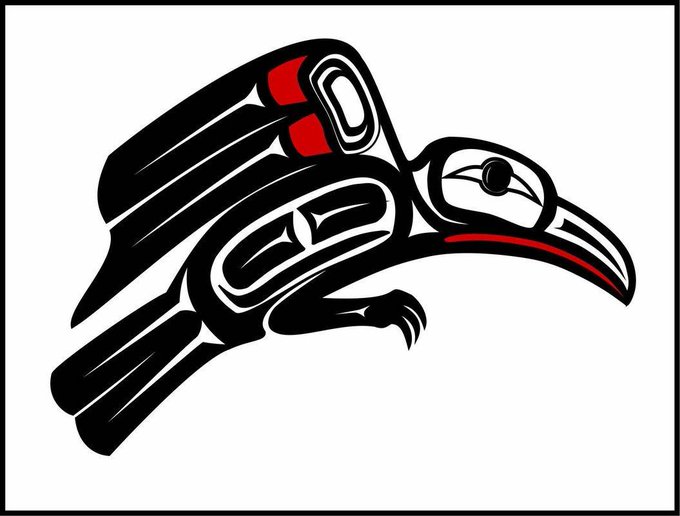
Raven may be credited as the creator of the world in Haida culture, but that's more accident than anything. Raven is a trickster, always up to mischief, and what happens with him is often less intentionally benevolent. #FolkloreThursday


At this time of year the soul stealer and sin eater will meet in the centre of #Newport at midnight; they play a game of chance for the immortal spirit of those that stumble by.
Who wants to hear a story of that encounter?
#IsleofWight #GothicAdvent #FolkloreThursday


#FolkloreThursday The Nutcracker & The Mouse King, a Christmas fairytale by ETA Hoffman, German fantasy writer of Gothic Horror, is a dark, disturbing tale in the tradition of folk tales told long ago. Its evil villain is the sinister, mutant 7 headed MouseKing.
🎨MauriceSendak


In Greek mythology, empusas are shape shifting beings with one copper leg and one leg of a goat. They take the form of beautiful young women who feed off the souls of men in order to become more powerful.
#FolkloreThursday
Art: Aleksandra Waliszewska


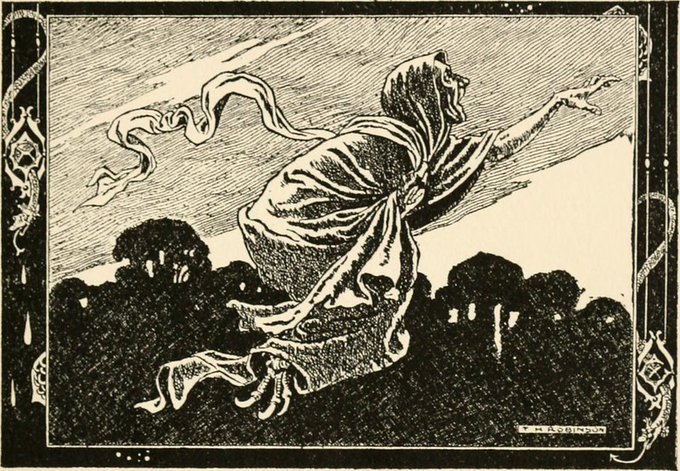
Churn-Milk Peg is a traditional British hag who sat in nut trees smoking her pipe and waiting for kids to come and pick unripe nuts. When a child reached for a nut she would pinch them and chide 'Smoke! smoke a wooden pipe! Getting nuts before they’re ripe!' #folklorethursday


Sinbad the Sailor is the protagonist of an ancient Middle-Eastern story cycle involving uncharted islands, sea monsters, giants, slave traders, hidden treasures, & other adventures. He's portrayed as clever, reckless, amoral, & ridiculously lucky. #FolkloreThursday


#Welsh #Mythology and #Storytelling: Telling the #Mabinogion by #HughLupton for #FolkloreThursday @crickcrackclub https://t.co/vWUvAvnfcb


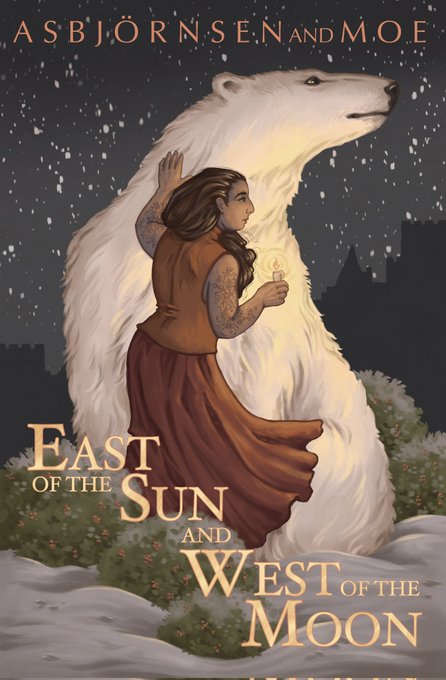
#FolkloreThursday
Frau Holle has power over the ice and snow in Germanic folklore, as well as a willingness to mete out reward and punishment. While East of the Sun and West of the Moon doesn't specifically mention snow (that I remember!), the girl travels through all weather.