SIBYLのTwitterイラスト検索結果。 40ページ目


I did @sibylline_m draw this in your style challenge over on IG! Does it show how much fun I had on this? I've been pretty artblocked recently and I feel like this illustration rekindled my love for this craft. It might be Sibylline's magic - her characters are always so lovable!


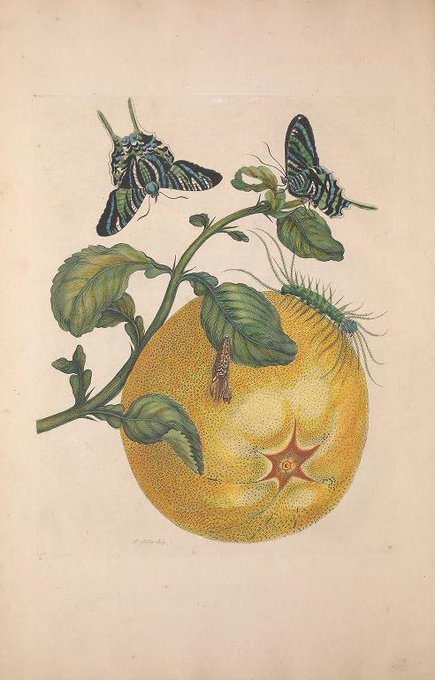
2/2 Two butterflies. Studied in Amsterdam in 1706 by Maria Sibylla Merian. It was her day.

Flowers in a Chinese vase. And some insects. By Maria Sibylla Merian, artist & naturalist, who was born on this day in 1647.


#ArtHistory 1647
Naturalist & #artist Maria Sibylla Merian was #bornonthisday in #Frankfurt.
"Art & #Nature shall always be wrestling until they eventually conquer one another."
#art #artists #fineart #illustration #germanart #painting #paintings #artquotes
#discoverher #botd


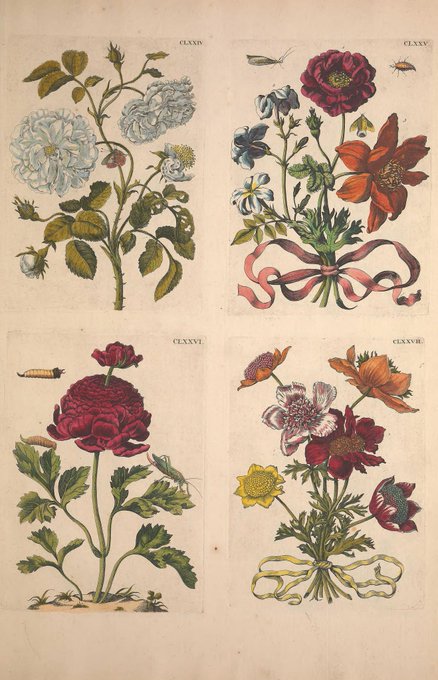

Happy Bday Maria Sibylla Merian (born #OTD 1647)! Celebrate with "De Europischen insecten" (1730), a Dutch translation of Merian's earlier "Der Raupen", with #SciArt drawn from first-hand observations of insect metamorphosis. In #BHLib via @SILibraries: https://t.co/xm9wccrUi4

Born on this day in 1647, naturalist & artist Maria Sibylla Merian. Here, Teucer Owl Butterfly & Rainbow Whiptail Lizard among the bananas, from her book The Metamorphosis of the Insects of Suriname, 1705. @womensart1


Maria Sibylla Merian born #OTD 1647 was a self-taught naturalists and artist who created stunningly detailed illustrations of insects and plants. I was humbled to draw her portrait for the @massivesci #sciencetarot #inspiration #sciart

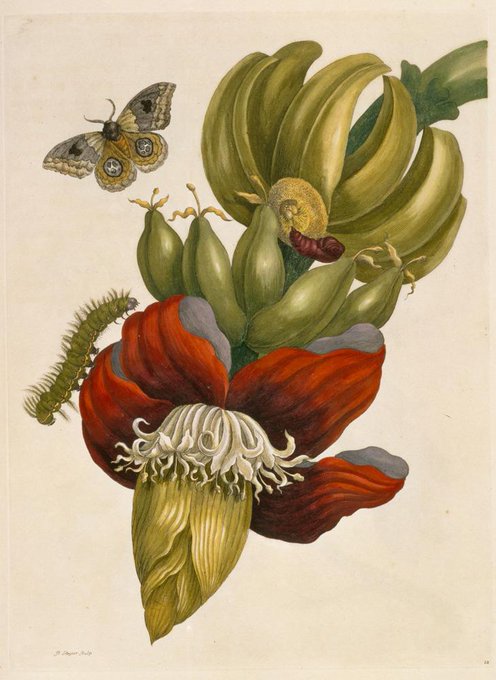
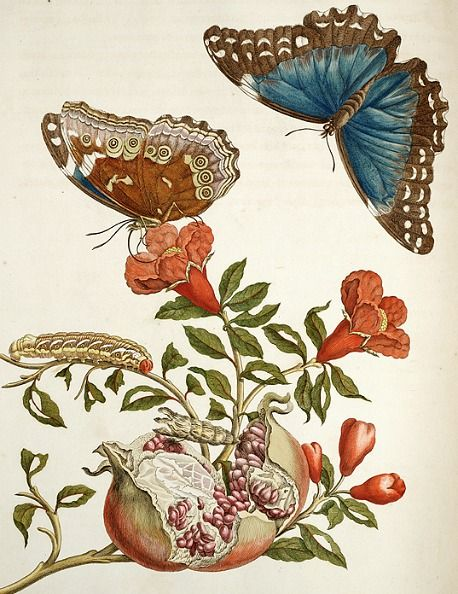

@KS1729 And it was Maria Sibylla Merian, a German-born naturalist, who documented Metamorphosis for the first time.
In 1799, she sailed to Suriname from Europe looking for insects - something no ladies were permitted to do back then.The results were a spectacular treasure for Science!


Spiders, ants and hummingbird on a branch of a guava - Maria Sibylla Merian, 1705. (Colored copper engraving from Metamorphosis insectorum Surinamensium, Plate XLIII.) #Merian


"Erucarum ortus" (1718) is a Latin translation of Maria Sibylla Merian's 2nd work, "Raupen wunderbare Verwandelung", depicting first-hand observations of insect life cycles & their food plants. See it in #BHLib via @LloydLibraryMus ➡️ https://t.co/iFcktbZ4vt #HerNaturalHistory


Maria Sibylla Merian’s early 18thc natural history illustrations, she was a major contributor to #entomology – particularly with her research on the metamorphosis of butterflies


We're excited to announce our project #AnimalsOfMCR for #MIF19 in collaboration with Sibylle Peters and @MIFestival in July 2019. An interactive Live Art experience which poses questions about the relationship between humans and other animals. https://t.co/uDcSsvBbMf


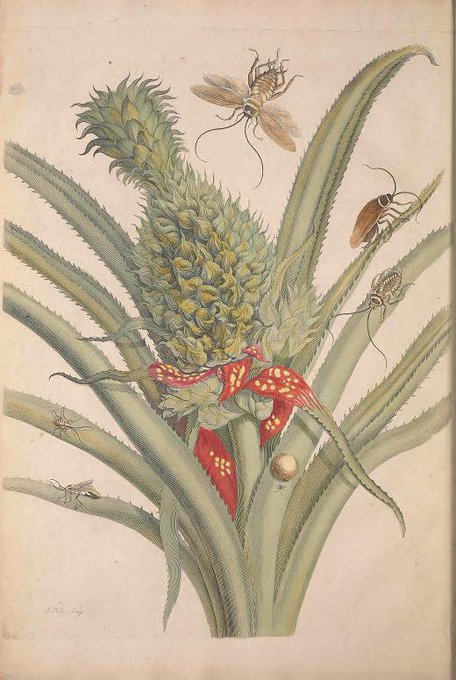

A closer look at the frontispiece in the 1730 Ed of Maria Sibylla Merian's work on the insects of Suriname: just to the left of the cherub's bum, I've only just noticed a miniature version of the book plus the pineapple from one of the plates growing in a pot!
#HerNaturalHistory


Défi #pionnières de @GallicaBnF : je choisis Maria Sibylla Merian, l'une des premières femmes illustratrices dans le domaine de l’histoire naturelle. https://t.co/AO6c5tYhSf

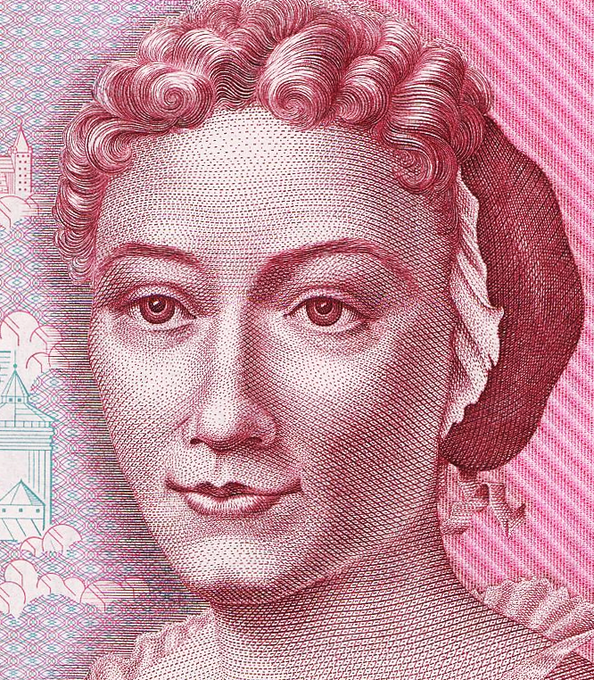


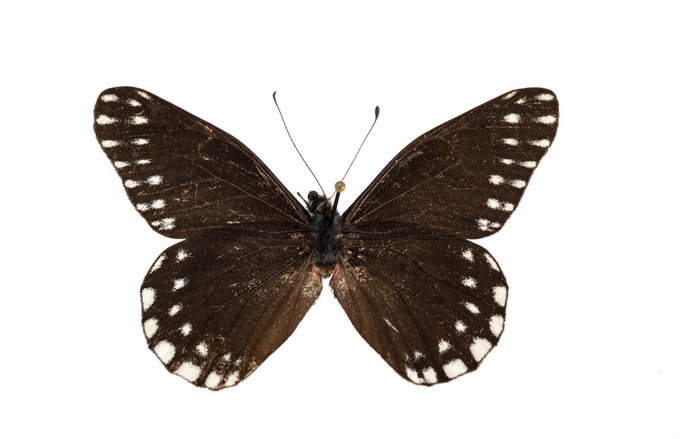
Artist & naturalist Maria Sibylla Merian traveled the world and was the first to accurately depict insect metamorphosis. #InternationalWomensDay #HerNaturalHistory
🦋 A rare black butterfly was recently named after her by our scientist Shinichi Nakahara: https://t.co/NYPJPpWOt7


Maria Sibylla Merian's observations of insect metamorphosis changed our understanding of the natural world forever, and her illustrations are as beautiful today as they were 300 years ago. #HerNaturalHistory