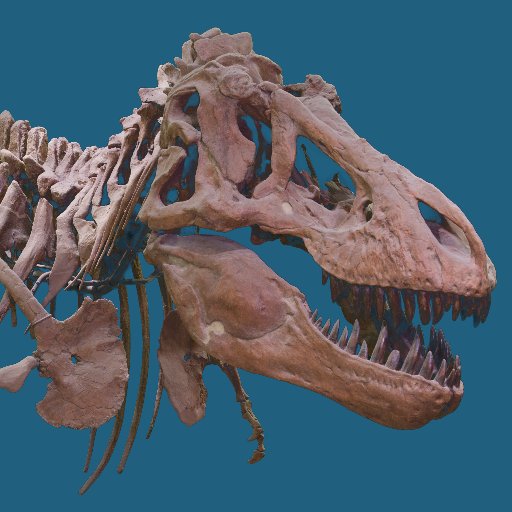
American Museum of Natural Historyさんのイラストまとめ
@AMNHFollow @AMNHさんをフォローする
フォロー数:869 フォロワー数:472435


🚨NEW RESEARCH: A study published in @ScienceMagazine—led in part by Museum researchers @Kimi_Chap & @JonahChoiniere—suggests a tiny desert-living dino Shuvuuia had extraordinary vision & owl-like hearing for nocturnal hunting in the Mongolian desert: https://t.co/fTJ3BOArBO

Microraptor gui was the first dino ever found with asymmetrical feathers on its back legs. Here’s why that’s a big deal: Asymmetrical feathers are adapted specifically for moving through the air! But it likely glided, rather than flying far under its own power.
[🎨: Zhao Chuang]
🚨Submissions needed!🚨
1) Send us a photo + question about a plant from outside or inside your house! 🌿
2) Tell us where you're from.
3) Tune in on #EarthDay at 10am ET: https://t.co/Pmdaoi6yA2
Botanist Donald McClelland will answer all your plant questions! #EarthDayFromHome

Gastornis gigantea likely stood more than 6 ft (1.8 m) tall—much larger than its relative Velociraptor. For a long time, paleontologists thought this extinct avian was a carnivore, but now scientists think it was a vegetarian related to ducks & geese!
[🎨: Z. Chuang/ © AMNH]

Let’s travel to the open ocean for today’s Exhibit of the Day! It’s a feeding friend-zy in the dolphin & tuna diorama. The location of their prey is constantly shifting, but these species often race together towards their next meal. #MuseumFromHome🐬🐟
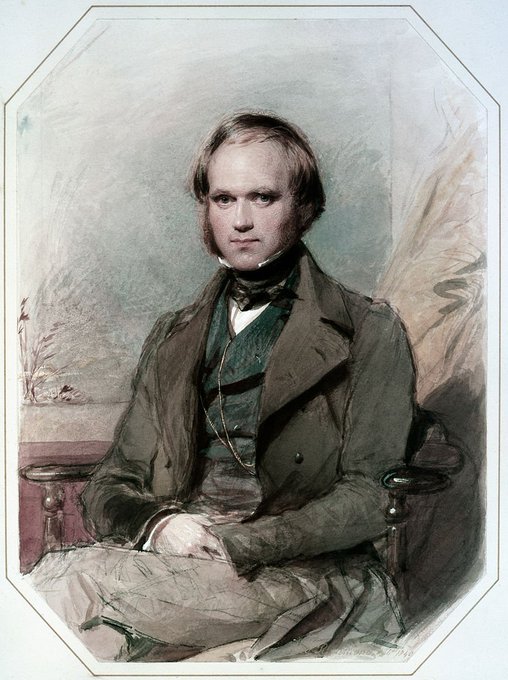
Fact #3: How did Darwin feel about his theory of evolution by natural selection at first? It was "like confessing a murder," he wrote. Imagining the public reaction filled him with dread. Yet gradually, over a decade or so, Darwin began letting trusted friends in on the secret.

Happy birthday to Edgar Allan Poe, the writer behind poem, “The Raven.” These shaggy-throated giants are part of the crow family. Ravens are social, highly intelligent hunters + scavengers. Some ravens have been observed using tools and solving complicated problems in the wild.


The aye-aye, found in Madagascar, confused many early naturalists: primate, rodent, or related to the kangaroo?
Answer: it's a primate.

Explore the Gobi in 360 on @Vimeo! This video is part of Shelf Life, an inside look at Museum collections: https://t.co/BeOr1M3sz4


