
History of Astronomyさんのイラストまとめ
@HistAstroFollow @HistAstroさんをフォローする
フォロー数:1077 フォロワー数:26699


13th-century Turkish miniature depicting Aristotle instructing students in the use of the astrolabe; Topkapi Palace Museum @topkapi_sarayi; via https://t.co/Zq1Ye2OHjK


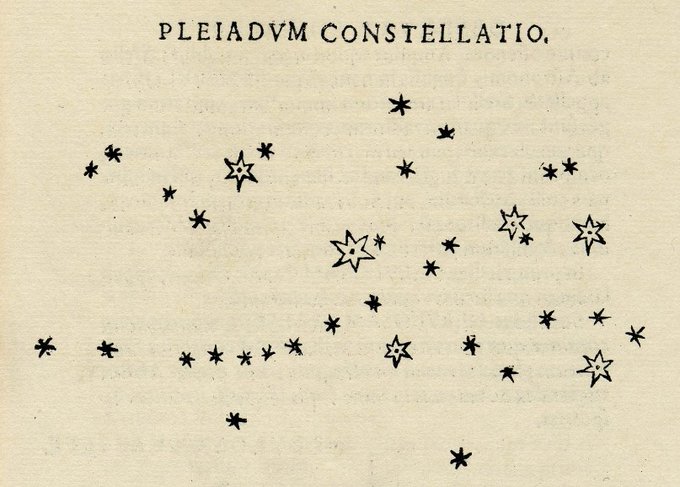

"A mass of innumerable stars: the telescope, from the uncertain patent to Galileo's and Kepler's discoveries" by @museogalileo, via https://t.co/Ncu4xMzU3y
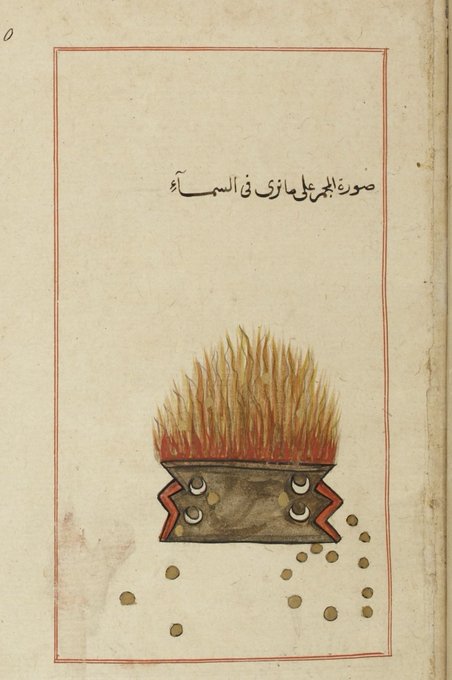

Southern constellation of Ara (the altar) in an 18thC copy (from either Egypt or Turkey) of al-Ṣūfī's Catalog of the Fixed Stars @GallicaBnF https://t.co/IXsx7LfydA

The constellation of Taurus as represented in al-Qazwīnī's "Wonders of Creation", 1762/3 copy (f. 26r, Arabe 2178) @GallicaBnF https://t.co/q7moyZLaKu
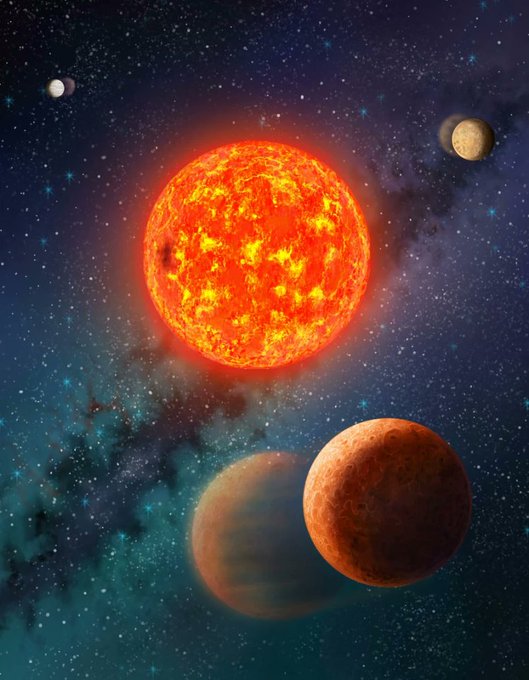
Artist's impression: How to paint a planet @nwtls https://t.co/dCrQXEnsbS

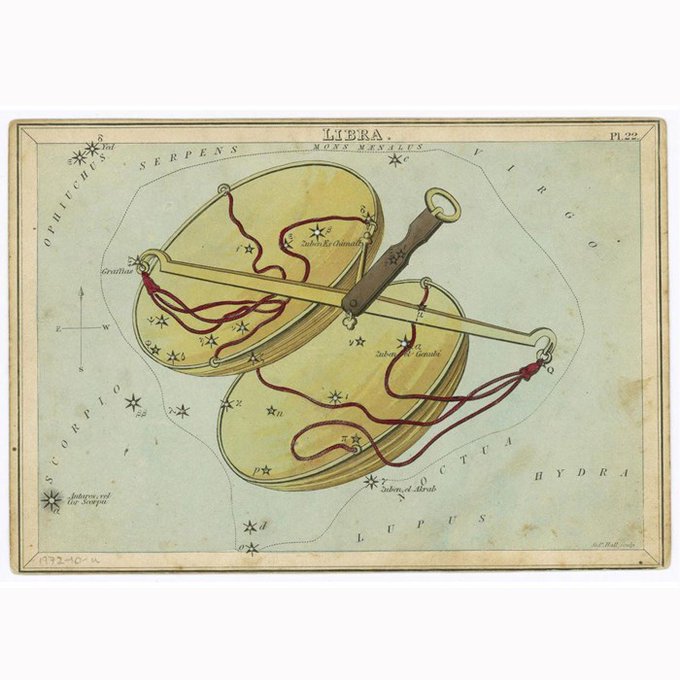
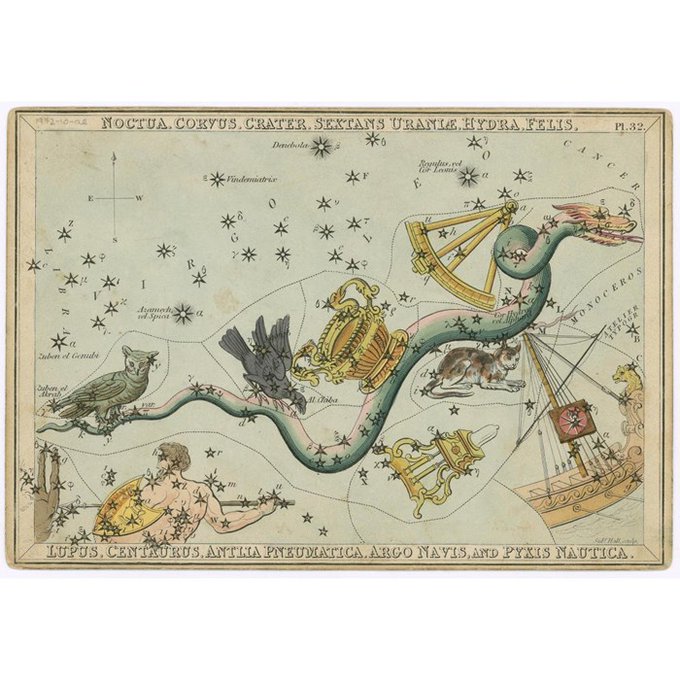
"Urania's Mirror celestial charts" - this set of thirty-two engraved and hand-colored celestial star charts were first printed in 1824 to help teach the constellations @NtlMuseumsScot https://t.co/DDaLxOZOzv

With all the successful deployments of the @NASAWebb Space Telescope (including primary mirror segments and secondary mirror), can anyone name the first space telescope ever launched into space?

Google Doodle honors French mathematician Émilie du Châtelet https://t.co/dJYhARWHc0

Folio from a 19thC manuscript from Sri Lanka with a drawing of the 12 zodiac signs; the central portrait is probably that of the god/prince Rāma, conqueror of the demon Rāvaṇa who had kidnapped his wife Sītā on the island of Sri Lanka @GallicaBnF https://t.co/nOUMXiTXHO

Print of Mars from the The Seven Planets series; Mars is represented as a warrior holding a burning torch and banner; with a ram representing Aries and a scorpion representing Scorpio; German, 1550-70 @britishmuseum https://t.co/Ui1zhIV0sh