
Pre Cinema History 📷🎞️🇨🇦 🏴さんのイラストまとめ
@RealPreCinemaFollow @RealPreCinemaさんをフォローする
Author, researcher and compiler of THE HISTORY OF THE DISCOVERY OF CINEMATOGRAPHY.
I post daily here on X.
フォロー数:306 フォロワー数:2610

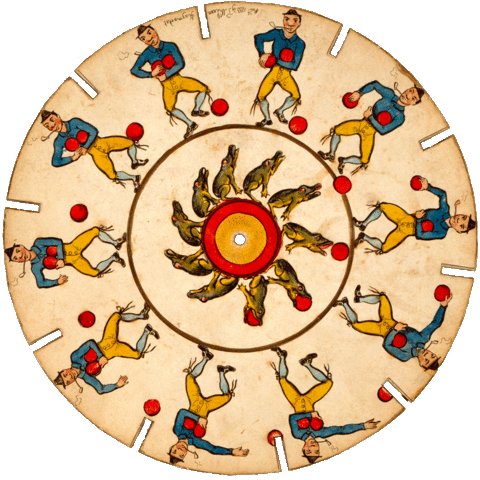
1832
SIMON RITTER VON STAMPFER (1792-1864)
Stampfer built his ‘Stroboscope’ this year with almost exact dimensions to that of Plateau's ‘Phenakistoscope’.
So similar in construction, looks and achievement, they have oft times been mistaken as the other. https://t.co/XjC71ipC0h


EDITH NORMA SHEARER (1902-1983)
Canadian-born in Montreal Shearer began her film career in 1919 earning six Oscar nominations in all, winning once for ‘The Divorcee’ (1930).
Her first film role was an uncredited spot in ‘The Star Boarder’ (1919). She became Mrs. Irving Thalberg.


The Desmarees painting shows the ‘painting within a painting’ and a cherub (l) with a magnifying glass looking at the subject who appears within an almost circular frame (typical of a zoom lens).
The portrait of Beich (r) from which the Desmarees painting was made. https://t.co/nuJ7VCFnEM
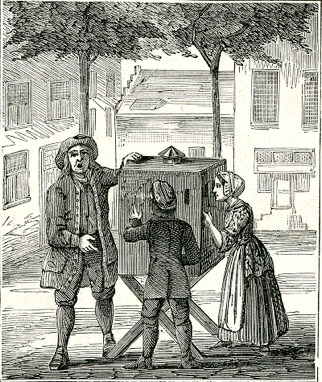


The old Dutch title of a ‘Raree Show’ was ‘t Fraay Curieus’, and referred to the cries “beautiful!!!” (fraai) and “extraordinary!!!” (curieus) with which itinerant performers announced themselves when they arrived in towns & villages. https://t.co/AnINT11tH2
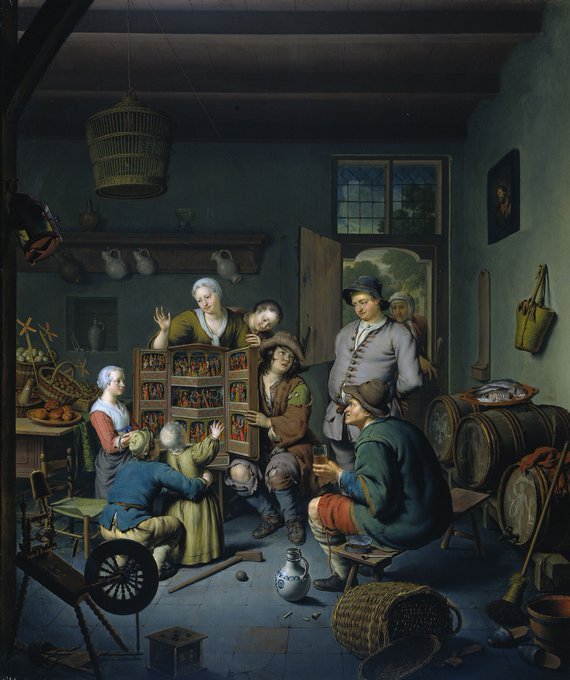

The ‘Raree Show’ was for the street or living room. Most were public exhibitions and hugely popular w/ children. Beginning c. 1860 it was called "in imitation of the foreign way of pronouncing rare show" [sic].
The innocent term ‘peep show’ later took on a more depraved meaning. https://t.co/KkHDtm1sli

Here is a ‘Raree Show’ with two lassies ‘peeping’ into the box, from Olive Cooks 'Movement in Two Dimensions- A Study of the Animated and Projected Pictures Which Preceded the Invention of Cinematography', Hutchinson & Co., 1963, p29. https://t.co/LVo4M1ADic


The ‘Raree Show’ was an exhibition of pictures, objects (or a combination of both), viewed through a small hole or magnifying glass into a ‘Peep Box’ operated by a travelling itinerant showman.
It was a popular form of entertainment during the 17th and 18th centuries in Europe. https://t.co/UXmIxRZhAj

This illustration is from ‘On the Malicious Player of Mr. Von Kempelen’, by Johann Gottlob Immanuel Breitkopf, (with seven copper plates), Leipzig and Dresden, 1789, showing the working parts behind the chess playing automaton of von Kempelen after making his own reconstructions. https://t.co/JGhFVGOtrm
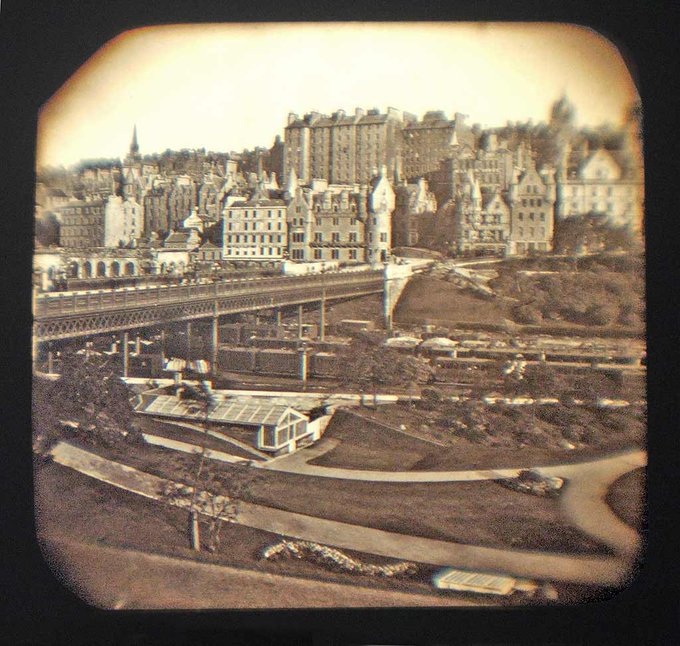
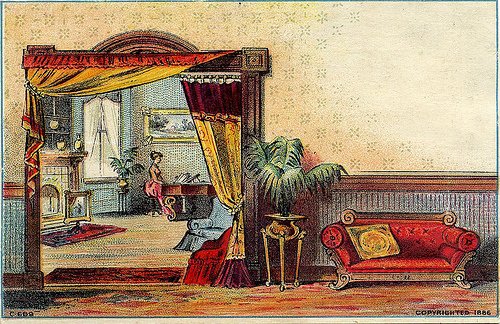


Then the Photograph made its introduction to ‘Chromolithography’ in 1858, as a new format for the lantern slide.
The majority of slide manufacturers from that point began to produce photo-slides, replacing the poorer-quality hand-drawn and painted slides. https://t.co/xSZpYgmeo4

The "writing on the wall" described in Daniel Chapter 5 v5-29 appears to be projected from a mirror or lantern, informing King Belshazzar that he has been found wanting.
This makes Rembrandt's painting one of the first ‘Phantasmagorias. https://t.co/yAGgYn9Apg