SwampSundayのTwitterイラスト検索結果。 192 件中 8ページ目


In the Finnish folklore swamps were believed to contain valuable treasures. Will-o'-the-wisps were believed to be seen in location of these treasures. People believed that the elf guarding the treasure was using the Will-o'-the-wisp to polish the valuables. #SwampSunday

In the Finnish folklore bogholes were believed to be the gates to the netherworld. They were guarded by the elves who many times were described as pretty maidens. The guardian could also be a spirit of a dead person which could be conjured up with the right words. #swampsunday

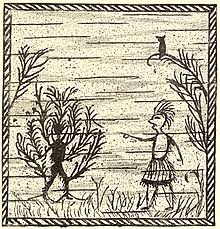

According to the Wabanaki folklore, a female ghost which goes by the name M-ska-gwe-demoos, used to live in the swamps and would cry sadly. She mainly used to scare children away from wandering around the swamps. It was advisable not to follow her voice.
#SwampSunday


"I would gladly follow even a will-o'-the-wisp through bogs" (Thoreau)
Two villages were drowned in the Red and the Black Bog of the Rhön Mountains for their sins. At night, one can see the village girls dance as will-o'-the-wisp on the moor
#SwampSunday #31DaysOfHalloween

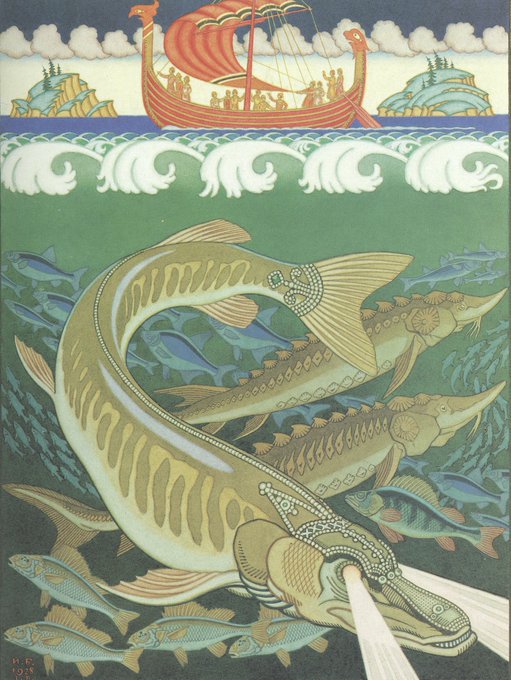
In Komi mythology, Vakul is the water deity.
A fisherman once hurt an eye of a big pike and was taken by Vakul under the water – that pike was Vakul’s son, so the deity took the poor fisherman’s eye and implanted it into his son’s eye socket.
#31DaysOfHalloween #SwampSunday


#SwampSunday
All the infections that the sun sucks up
From #bogs, fens, flats, on Prosper fall and make him
By inch-meal a disease! His #spirits hear me
And yet I needs must curse. —The Tempest, Act II, Scene 2 by William Shakespeare
#31DaysOfHalloween
🎨Edmund Dulac


10月が終わるので企画の名前を変えます。31日目まで続けます。
二十四日目は九千坊!
October will end from tomorrow, so I will change the name of this project.
This will continue until the 31st day.
Day 24:kusenbo
#yokai #illustration #JapaneseFolklore #ayokaiaday
#SwampSunday


#SwampSunday
“Away to the Dismal Swamp he speeds—
His path was rugged and sore,
Through tangled juniper, beds of reeds,
Through many a fen where the serpent feeds,
And man never trod before. “
by Thomas Moore

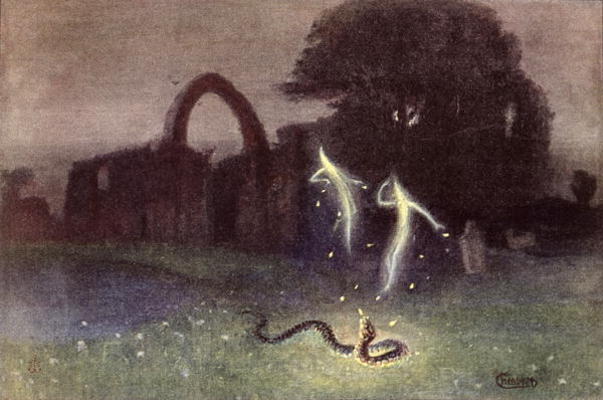

Originating in ancient English folklore and later all over Europe & North America, a 'Will-o'-the-Wisp' is a ghost-like light seen by travelers at night, especially over bogs, swamps or marshes. #SwampSunday
Art from:
Hermann Hendrich, 1823.
Arnold Böcklin, 1882.


Slavic mythology: Biali Zimni Ludzie (White Cold People) - demons that personify illness. Varying size, living in forests, swamps & are bad omens, climbing onto the face & entering sleeping victim’s body through the mouth/nostrils infecting people with illnesses. 🐍
#SwampSunday


Kappa, water monsters hungry for humans, can be found in any freshwater source in Japan, including swamps. The bowl on their head contains water, but you can trick them by bowing deeply and pouring it out, weakening them. #SwampSunday
#ayokaiaday
🖼: Atelier Sentô


#SwampSunday
The Namungumi of the Yao (Malawi, Mozambique, and Tanzania) lives in Lake Nyasa AKA Lake Malawi. It is easily recognizable by the grid pattern on its skin. Namungumi are Yao initiatory figures which represent water and kinship.

“So lovely was the loneliness
Of a wild lake, with black rock bound,
And the tall trees that tower’d around.
But when the night had thrown her pall
Upon that spot — as upon all,
And the wind would pass me by
In its stilly melody”
“The Lake” by Edgar Allen Poe
#SwampSunday


Loch Iorsa on the Isle of Arran has it's very own monster myth. The loch's name means 'loch of the serpents'. This serpent is perhaps a 'wurm' from folklore
https://t.co/nThQYKjP0p
#SwampSunday #AyrshireFolklore


#SwampSunday
Shellycoat:
A water spirit that haunts rivers & streams in Scotland. Their name comes from the coat of shells they wear & are considered harmless creatures. If they think you're trespassing, they will scream out as if they were drowning & then laugh at your fear 🖤


The Scott sisters Harriet (1830-1907) & Helena (1832-1910) of Ash Island NSW (Kooragang Wetlands) are admired for their beautiful & scientifically accurate paintings of local Australian insects & plants. The Scott homestead is no more, reclaimed by mangroves #SwampSunday


Studio Ghibli often draws inspiration from folklore to create their characters. Granmammare is referred to as “Kanon” the Patron of mercy, fisherman and seas. Her character is based on a classic image of Shakespeare’s Ophelia by Sir John Everett Millais. #SwampSunday #sundayvibes


Sweet are the uses of adversity,
Which, like the toad, ugly and venomous,
Wears yet a precious jewel in his head;
#ShakespeareSunday #SwampSunday


Oval frog (Engystoma ovale) and Green toad (Bufo viridis) illustrated by Charles Dessalines D' Orbigny in the 1892 edition of Dictionnaire Universel D'histoire Naturelle. #SwampSunday