TriassicのTwitterイラスト検索結果。 14ページ目


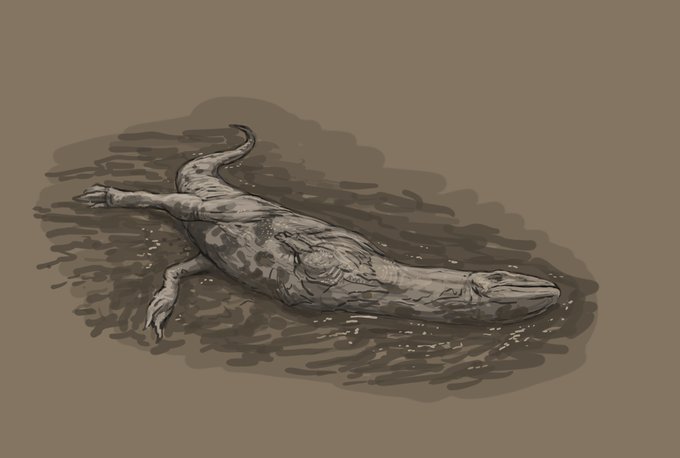
It’s #WhaleWednesday so here’s a…
Wait a minute. That’s not a whale!
This is a giant ichthyosaur. Ichthyosaurs were the first truly gigantic animals to evolve. The largest skeleton is 21 metres long and belongs to the Triassic species, Shonisaurus sikanniensis.


Results from the #paleostream
Poposaurus, Crassigyrinius, Saurosuchus and Meganalia/Varanus priscus.
#paleoart #lizards #triassic #carboniferous #pseudosuchian
#sketches #sciart

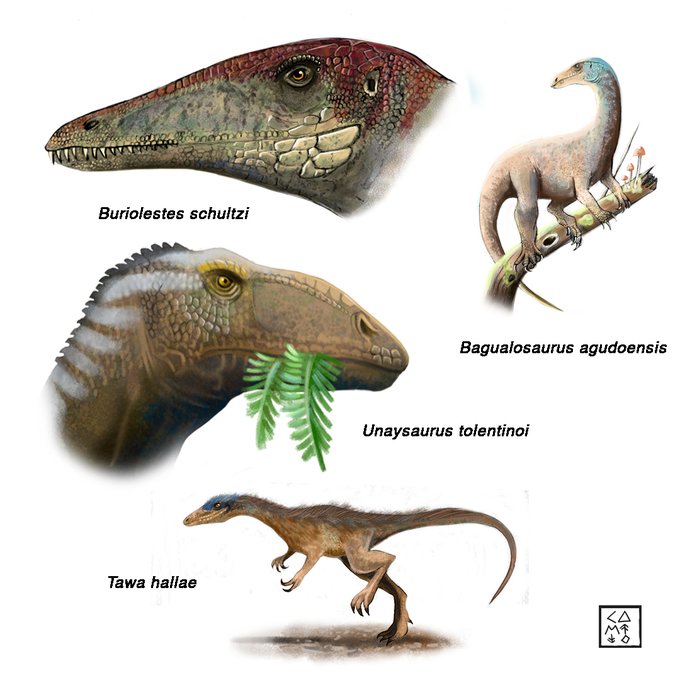
Dinosaurs from Triassic period for #FossilFriday #Paleoart #Dinovember


Lystrosaurus. Late Permian–Early Triassic, 255–250 million years. Herbiverous Dicynodont (two tusks). Art by Maurice Wilson. #cigarettecard #MauriceWilson #Lystrosaurus #dinosaur


Dadadon isaloi is an extinct cynodont which existed in Madagascar during the late Middle Triassic.
(Credit: Theropsida)


Work in progess: a possible solution to yesterday’s problem fitting Coelophysis - a Triassic predatory dinosaur - in a frame. The proportions still need another check, but I like his cheeky expression.


Originally, I had planned to hopefully do 2 books. The first one about the tetrapods of the Triassic and Jurassic, and the second one about the Cretaceous. However, as I have worked on it, the first book has become humongous!



Results from the Flocking together #paleostream.
Yi qi, Mononykus, Majungasaurus and Desmatosuchus.
#paleoart #dinosaurs #triassic #yi #sketches #sciart


Today’s #Stemcroctober is Poposaurus gracilis Mehl 1915 from the Upper Triassic of the western US. Poposaurus has a remarkably similar body plan to dinosaurs, yet has hallmarks of all pseudosuchians. We know almost the full anatomy, minus parts of the skull #Croctober #AtoZCrocs


Reading A New History of Life by Ward and Kirschvink. Was unaware that low oxygen levels correlate with increased disparity, while high oxygen levels correlate with increased diversity. Hence the high disparity of the Cambrian and Triassic.


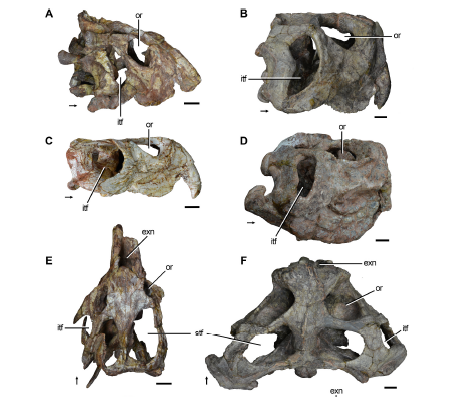

Interested in the Triassic stem-archosaurs from South America? Check our recently published revision of the group. New information about rhynchosaurs, proterosuchids, proterochampsids, and other Triassic archosaur precursors! #FossilFriday #paleontology
https://t.co/CXtvb0bHng


Covers I did for my friend Gin's Fanfiction AU "Triassic Planet" which is a Jurassic world AU involving my headcanon versions of AHIT characters and my ocs and hers


Today’s #Stemcroctober is Desmatosuchus spurensis Case 1921, an aetosaur from the southwest. It was a one of the largest with shoulders spikes measuring ~50 cm. The diet is his unknown, but it could have been the largest herbivore of NA in the L Triassic #Croctober #AtoZCrocs


F is for Fasolasuchus (B in this pic), a very distant croc-relative from the Triassic of Argentina. It’s in a messy part of the #stemcroctober tree we sometimes lump together and call “Rauisuchians.” #Croctober #AtoZcrocs #fossils
📸 Lessner et al 2016: https://t.co/3k8BveHwLn

Ecstatic to be illustrating this amazing book series! The first four books out MAY 2021! Here is the preliminary Lisowicia for the, you guessed it, Lisowicia book (book 4). Lisowicia is a Late Triassic dicynodont (a distant relative of ours) #paleoart #sciart #mammalmonday https://t.co/4W3dWC5dO2


New online: Hendrickx, Gaetano, Choiniere, Mocke & Abdala – A new traversodontid cynodont with a peculiar postcanine dentition from the Middle/Late Triassic of Namibia and dental evolution in basal gomphodonts https://t.co/lJhw2LL6aS


#Interactive #map of #Earth shows where your #home was #500MillionYears ago #London as it was in the Middle #Triassic #220MillionYears ago. (#AncientEarth) and #London when the #FirstShells emerged #540MillionYears ago. <3 @jzebraa https://t.co/kwVUfKpyeK

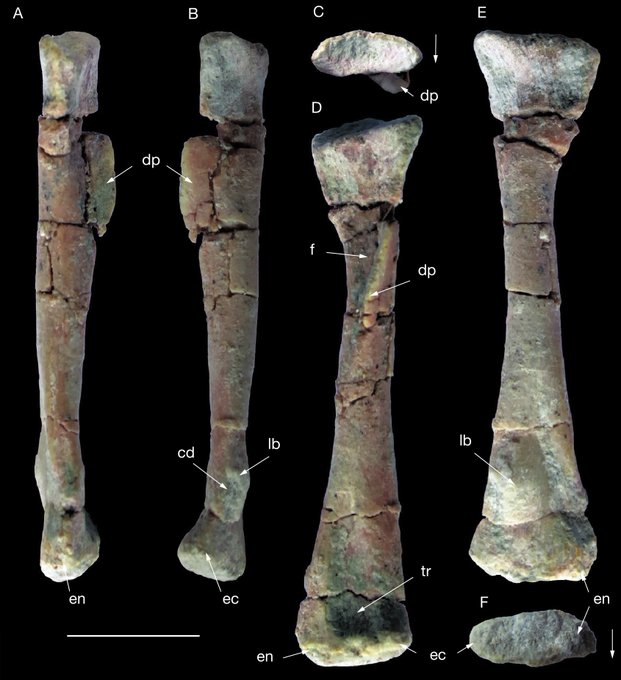
New specimens of the suchian archosaur Gracilisuchus from the Triassic of Argentina- nice forelimb material and histological analysis by #DAWNDINOS collaborator Lecuona et al.: https://t.co/mpMkijPDeK

The Triassic sure was full of weird critters.
Hyperodapedon looked like a huge herbivorous tuatara, but was in fact more closely related to dinosaurs and crocs. I gave it a generous amount of soft tissue including ’lips’ and a gecko-like fat tail.


@Smatterbrain It's hard to pick an underappreciated prehistoric animal, since that would actually be most of them.
Here's one I learned about recently that I previously never heard of- Silesaurus. It lived during the Triassic period in what is now Poland/central Europe.