5189.のTwitterイラスト検索結果。


DIspelling today's weird vibes with some positivity. Everyone meet Mags #5189.
I'll get the hang of the bunker formatting tools eventually 😅 until then enjoy Mag's Origin Story "living the dream"
https://t.co/IkiEoIN99j
@nuclearnerds


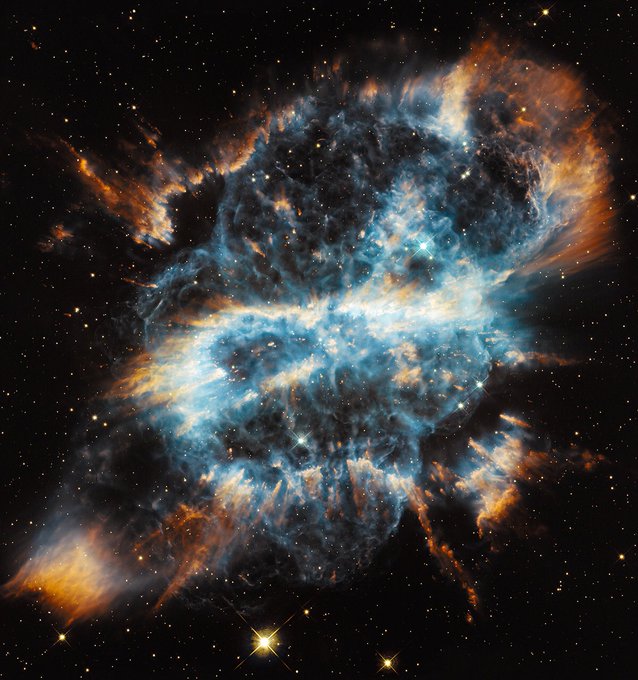
Today Chandra is studying stars in Musca, the fly. Nearby in the sky is planetary nebula NGC 5189. Why is it shaped like the letter "S" in reverse? The star at the nebula's core is spewing matter as it rotates & wobbles — like a colossal cosmic lawn sprinkler of sorts.


The stunningly complex planetary nebula in this @NASAHubble image is NGC 5189. Planetary nebulae are formed near end of life of Sun-like star.The star becomes a red giant which ejects its envelope,and the exposed hot core irradiated the ejecta. NGC 5189 is 1,800 light-years away.


Azuki Custom Banner #4 & #5 I made for @R_jayyyyyyy and his lovely gf featuring Azuki#9945 & Azuki#5189.
“Take us to the Summer Festival in Japan to see the fireworks💥 ”
— R-jay.eth
Hope you enjoy the fireworks and must go see it IRL! 🎆
@AzukiOfficial #Azuki #AzukiArt #NFT

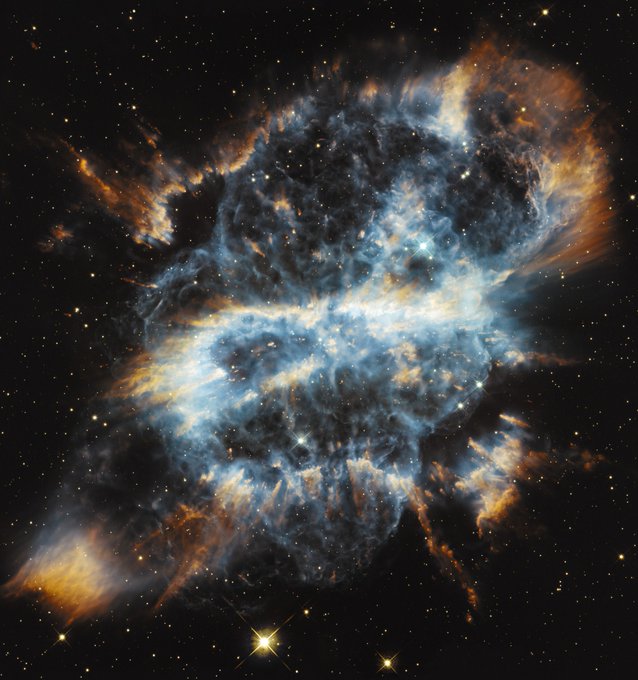
"...planetary nebula called NGC 5189....Planetary nebulae represent the final brief stage in the life of a medium-sized star like our sun. While consuming the last of the fuel in its core, the dying star expels a large portion of its outer envelope."
https://t.co/BX6PKvXakc


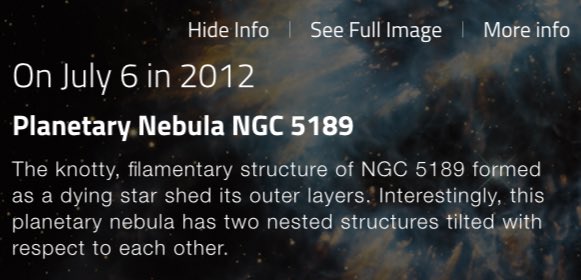
#OTD in 2012, @NASAHubble's Wide Field Camera 3 captured this photo of Planetary Nebula NGC 5189. The unique structure of NGC 5189 was formed by a dying star shedding its outer layers.


Este colorido y complejo paisaje es NGC 5189. Es una nebulosa planetaria, producida por una estrella, similar al Sol, al final de su vida. Se cree que está en un sistema binario. La nebulosa mide unos 3 años-luz y está a 3000 años-luz. Crédito: NASA/ESA/Hubble #FelizMiercoles