eoceneのTwitterイラスト検索結果。


Hemingwaya Reine
Hemingwaya sarissa is a small species of prehistoric billfish from the Eocene era. It's about 50cm long.
#Reinessance

Bagarius gigas, a large extinct species of sisorid catfish from the Eocene West Sumatra and Java. The fossil is fairly fragmentary, but it is estimated at 1.5-2m long, just like the extant Bagarius lica and Bagarius yarelli.
#paleonusantara #paleonusantara2


ひっさびさに5/5のスパコミ出ます~もちろん遙凛ちゃんです!
東6ゆ53b「Pleocene」
新刊「とおいはる」A5/34P/¥500
全年齢遙凛ちゃん
以下サンプル(1/2)


I WILL LIBERATE YOU FROM THE CHAINS OF YOUR LIFE
YOUR SOUL NOW BELONG TO MEEEEEEEE
RISE as a creature of darkness!
RISE as an undead machineeeeeee
IN THE NAME OF THE SORCERER POTATO-YI
VANQUISH THE PALEOCENEEEEE
YEEEEAAAAAAAHHHHHHHH https://t.co/Fmmf0qoQWQ


Paleo Fact!
Sahitisuchus (Brave Vrocodile) is a sebecid from Eocene Brazil! It's believed to have been partially adapted for an semi-aquatic lifestyle! It had traits like a flattened and wide skull that is more akin to the skulls of aquatic- (1/3)
Art by Júlia d'Oliveira!


Sarkastodon was a large meat-eating mammal from the middle Eocene, 40 million years ago. At 3m long and weighing possibly up to 800kg it would have been around the size of a very large polar bear! It wasn’t closely related to any mammal alive today.


Eoconstrictor was an ancient boid snake that lived in the Eocene Messel Pit. Based on skull structure, it was one of the earliest known snakes with infrared vision.
#MesselWeek #Paleontology
https://t.co/bs5zpI1XSN

Paleo Fact!
Sebecus ("Sebek" in Latin) is a sebecid from Eocene South America! It's named after Sebek, an Egyptian God who is often depicted with a crocodile head! It's the type genus of the Sebecidae family and one of its first known members, being-(1/2)
Art by Joschua Knüppe!


Georgiacetus from the middle Eocene ,took more time than expected on the water


Most recent Wiki page I created deals with Gaffneylania, an Eocene horned turtle (Meiolaniidae) from Patagonia.


The front cover for PALEOCENE #4! The search for Sister continues, with a stunning realization. Join the mailing list to get early news about the crowdfunding campaign later this year: https://t.co/V1Q59Wvf5o #comics #ComicArt #paleoart #paleofiction #paleontology #Primates

Paleo Fact!
Megacerops (Large Horned Face) is a brontothere from Late Eocene North America! It possessed a distinct set of two blunt horns on its snout, with male individuals having larger ones than females did! It's speculated that the males- (1/2)
Art by Joschua Knüppe!

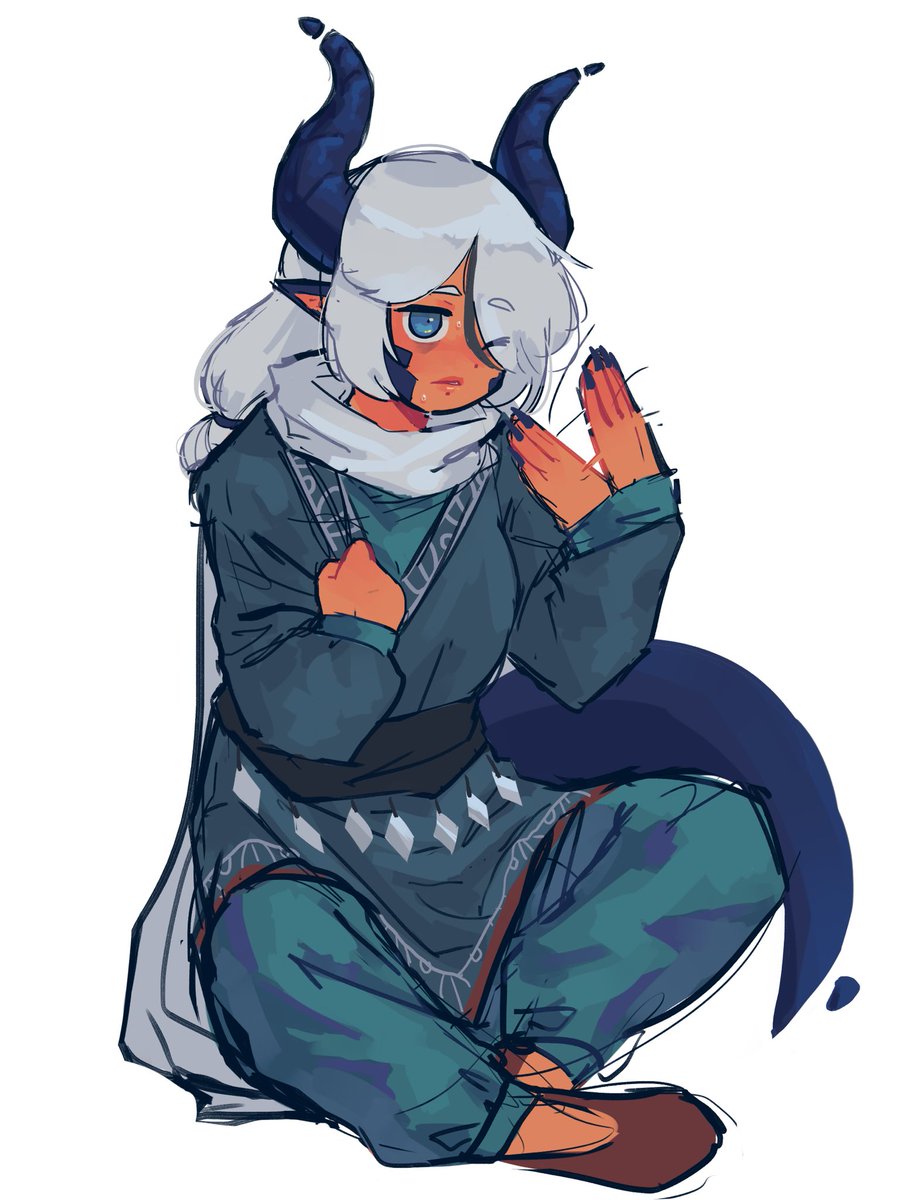
Here's a WONDERFUL Lindre commission!! Fun fact: she's not used to the weather and heat above ground since she lives in the underdark.
🎨 from @/p2eocene


First image is a spectacular illustration by the talented artist @CorbinRainbolt. Long ago in ancient Egypt, during the late Eocene, a pair of Arsinoitherium zitteli emerge into a clearing within a dense rainforest. Arsinoitherium may look rhinoceros-like thanks to the


A submission for the #paleostream server's diorama challenge !
A little glimpse of the Eocene Sangkarewang Formation, West Sumatra, Indonesia.
#paleoart
#sciart


Doing the ground sloth thing before there were ground sloths
Concept sketch of a pair of Barylambda, a large pantodont mammal from the Late Paleocene of North America

Paleo Fact!
Hesperocyon (Western Dog) is a canid from Eocene North America! It's possibly the oldest known canid, with one specimen dated to be as far back as roughly 39-40 million years ago! But in spite of this, it looked very different from- (1/2)
Art by FabrizioDeRossi!


Here you can see what I did for Atlantis phase 1 and 2. 3 submission in total, my first 2 made it into the Paleocene island's fauna, now I'll cross fingers for my newest creation.
#Atlantisbestiaryphase2 #speculativebiology