
Dr Robert Bohanさんのイラストまとめ
@RobertBohanFollow @RobertBohanさんをフォローする
フォロー数:247965 フォロワー数:294337


Critics have sought to categorise her work into periods. A woman of Morisot’s ability does not fit into boxes, however, so such straitjackets are best avoided. Aboard a Yacht (1875), Eugène Manet on the Isle of Wight (1875), Dahlias (c1876) & Still Life (1876)

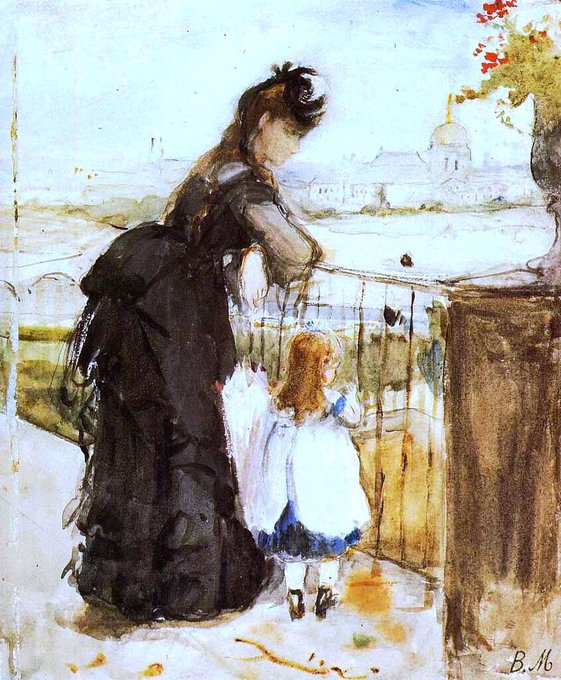


In the early 1870s Morisot explored the use of watercolours. Watercolour allowed her to complete studies quickly & with chromatic vivacity. Young Woman (1871), On the Balcony (1872), The Artist’s Sister & Niece (1872) & The Cradle (1872)

Morisot visited the Louvre to copy as part of her ‘finishing’ & met Corot, Monet & Manet there. Corot introduced her (1860) to painting ‘en plein air’ & to the immediacy of observation & depiction. She continued to train under artists until 1864. Copy of Veronese (1858)


Concert (c1930), Hyacinth (1932) & Flowers (1934). The latter is beautiful in how he shows the flowers Contre Jour. As his health deteriorated he was unable to travel South.

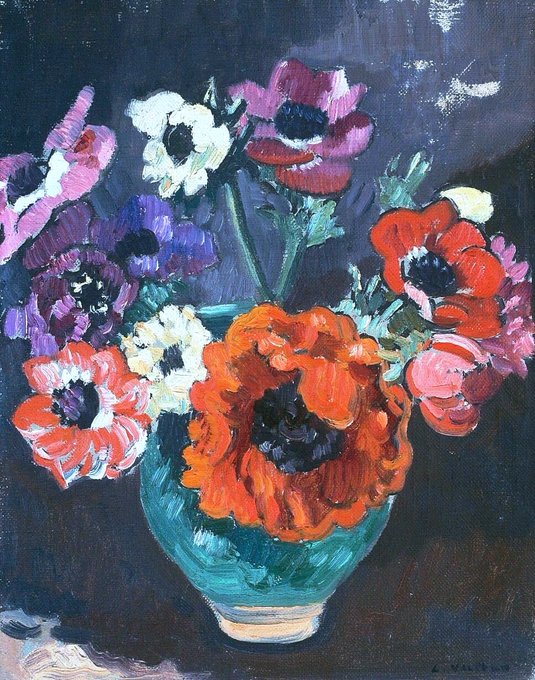
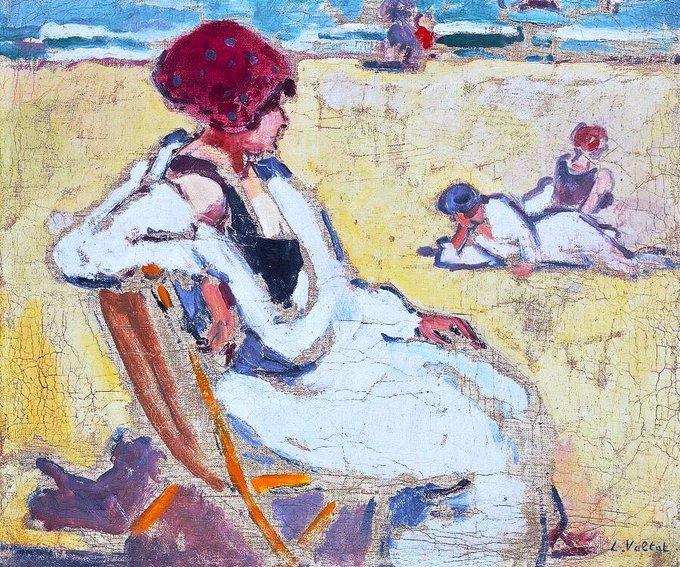
From 1914 he worked in Paris, Rouen & Versailles. Child Drawing (1914), Anemones in a Green Vase (1915) & White Pegnoir (1916). His work sings with joy & it’s clear that painting soothed him & helped him forget how ill he was.


The theme through his work was colour & this would inspire the Fauves such as Matisse & Derain. Two Flower Pots (1909), Basket of Fruit (c1910) & Flowers (1913)


The landscapes which inspired him most were cliffs. However, probably due to his health, he has also left us many fine flower studies. Self-Portrait with Cat (1899), Buttercups (1900) & By the Sea in Southern France (c1900).
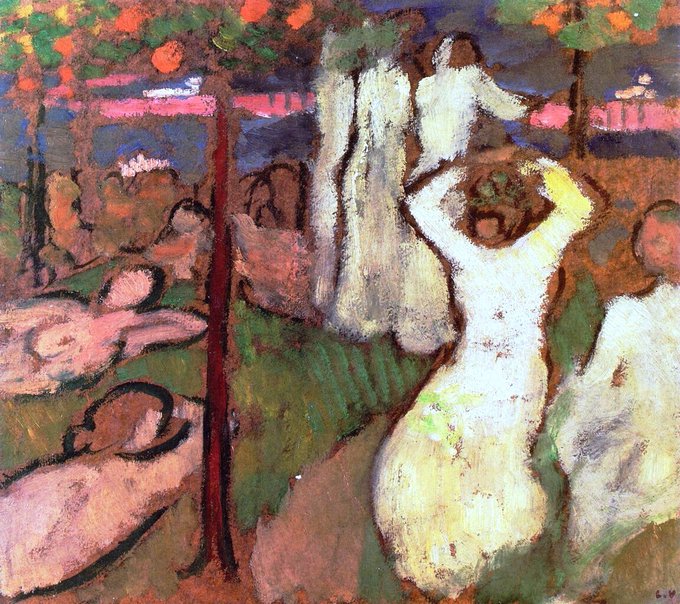


He suffered from ill-health, as he had TB. This had the effect that he would spend his winters at the Mediterranean. He would visit Renoir & collaborate with him, there. Figures by the River (1895), The Madeleine-Bastille Omnibus (1895) & Nude on a Green Armchair (c1895)

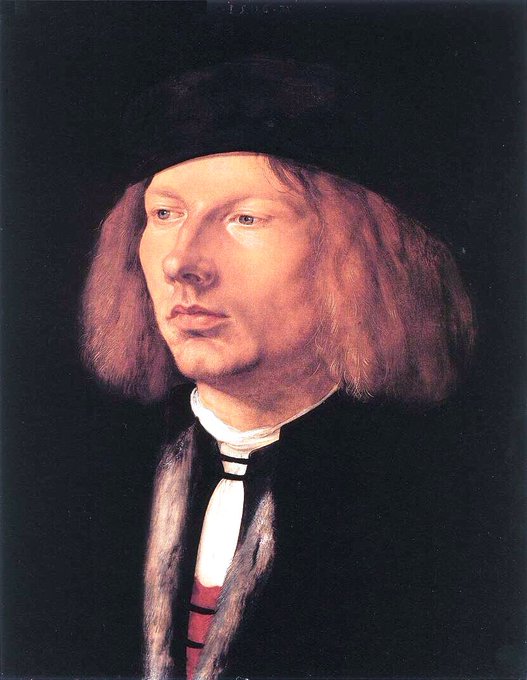

I love his intense psychological portraits which are forebears you the expressionist German portraits of the 20th C. Here’s a Venetian Woman (1505), Burkard von Speyer (1506) & Portrait of a Girl (1515). The latter drawing fascinated me as a child.


The Dagda King of the Hiberno-Celtic Gods (2020) https://t.co/EfoW7jX0zl