
curious ordinaryさんのイラストまとめ
@curiousordinaryFollow @curiousordinaryさんをフォローする
#JapaneseFolklore #MythologyMonday #FairyTaleTuesday #FolkloreThursday #FolkloreSunday #yokai #ukiyoe
curiousordinary.com
フォロー数:817 フォロワー数:18444


Tesso is a #yokai that takes the form of a gigantic rat. This creature is the vengeful spirit of a monk named Raido who was betrayed by the emperor. Tesso gathered an army of rats that wreaked havoc on the places and people associated with Raido's betrayal.
#FolkloreThursday
1/2


Cherry blossoms, known in Japan as sakura, represent springtime and symbolise fleeting beauty and the shortness of life. Festivals to celebrate these flowers occur in spring and are known as hanami. Sakura were a favourite subject for Edo era #ukiyoe prints.
#MythologyMonday

'Hero Holding the Beacon for Leander' - Evelyn De Morgan, 1885.
#preraphaelite #art #mythology

'Love Among the Ruins' - Edward Burne-Jones, circa 1873 (watercolour).
#preraphaelite #art

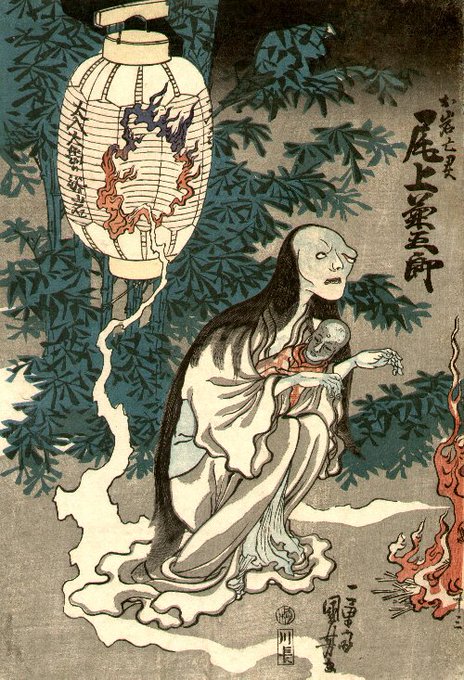
Oiwa is a Japanese ghost, the vengeful spirit of a young woman betrayed by her husband. He disfigured her face in an attempt to get rid of her so he could marry a younger woman. She cursed the pair on her death and returned to haunt all who had betrayed her.
#FaustianFriday
1/3

'Deer in the Forest' - Eugen Kruger, 19th century.
#FolkloreThursday #forest #art

In #JapaneseFolklore, Kodama are the spirits of trees, similar to dryads of Greek mythology. While they are attached to specific trees, they can also move freely through forests and can appear as glowing orbs of light. They maintain the balance of nature.
#FolkloreThursday
1/2


Did you know that the unicorn is Scotland's national animal? Scottish artist @stewartbremner has two pieces featuring this fantastic creatues, so I thought I'd share them for #NationalUnicornDay & #FaustianFriday. Visit @indy_prints or https://t.co/D16gvLGfV2 for more art & info.

In #JapaneseFolklore kappas are a type of water goblin that can be very dangerous. They absolutely love cucumbers though, so if you're near water, keep a few handy in case you need to distract the kappa for long enough to escape.
#FolkloreThursday #yokai
1/2
