folkloreThursdayのTwitterイラスト検索結果。 3,684 件中 61ページ目


The very first Cinderella tale was actually recorded around AD 850 in China. She was known as Yehhsien. Her shoes were made of gold and she wore a dress that was made of kingfisher feathers.
#FolkloreThursday


An English tale tells of a baker’s daughter who used a tiny bit of dough when baking for the poor. When she put the loaf in the oven it expanded massively. She was so surprised she said ‘hoo hoo’ and turned into an owl as a warning to be generous to the poor. #FolkloreThursday


Oisín, son of Fionn, went off to Tír na nÓg (Land of Youth) for 300 years - he thought it was only 3. He returned but was warned not to get off his steed. He fell off the horse & on hitting the ground turned into a withered old man.
#FolkloreThursday
https://t.co/7zrNZuAoGu


#folklorethursday I like a bit of gore in my folklore so here is the Beast of Gévaudan - let's preserve our wolves and foxes and live with wild beasts among us - they won't attack us but scarey stories are good too #NationalStorytellingWeek

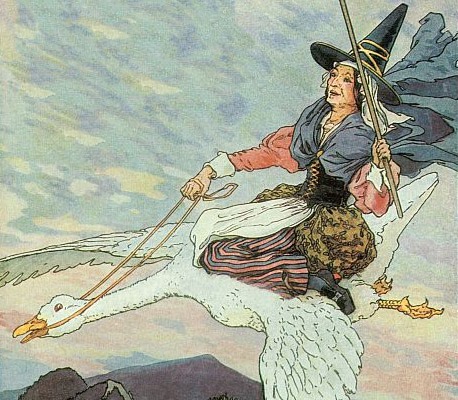
Mother Goose is an imaginary teller of #fairytales & rhymes. Part witch-figure, her fame grew with Perrault's Tales (1695) including Cinderella & Sleeping Beauty.
Representing an ancient line of female storytellers, her origins have been lost
(🎨F Richardson) #FolkloreThursday

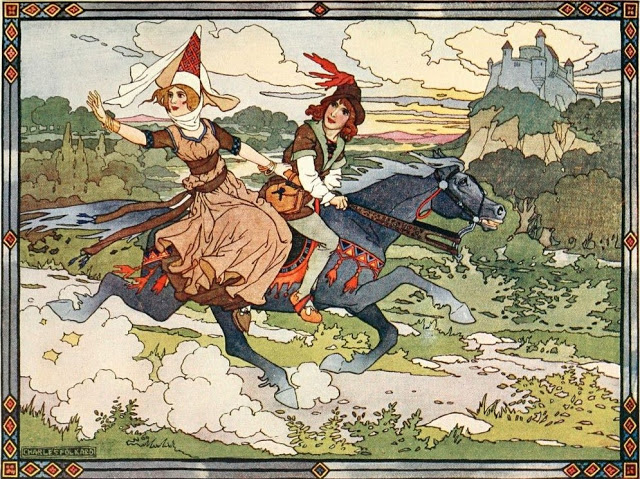
One of my favourite fairy tales is 'The Mastermaid' collected by Asbjørnsen & Moe. I've put a hint of broad Yorkshire into this light retelling to bring out the northerness. See if you can hear it! And the Mastermaid herself is a marvel. https://t.co/tbyk194bjR #FolkloreThursday


The King of the Golden River, by John Ruskin (1841). 3 brothers are tasked by a kingly dwarf to deliver 3 drops of holy water to create a river of gold. Only the good brother succeeds as he puts others’ needs above his own. Illust: Arthur Rackham 1932 edition. #FolkloreThursday


Another one of my favorite #Tales is 'The Emperor's New Clothes.' Where a pompous King believes he is parading around the finest material; invisible to all who are stupid or incompetent. When actually, he is the naked fool.#FolkloreThursday #NationalStorytellingWeek2021


#FolkloreThursday
In Scottish and Irish legends, Selkies are mythological beings (the tales tend to centre around females) that changed from seal to human form by shedding their skin. My absolute favourite embodiment of this myth has to be Song of the Sea 💙


Gwyllion are a type of Welsh mountain fairy. They are described as hag-like creatures who cause unsuspecting travellers to become lost whilst travelling through the mountainous regions. Pulling a knife out of the pocket was a method of banishing the Gwyllion #FolkloreThursday


#FolkloreThursday
Mad as a Hatter a term used in 1800's England, when factories used mercury in the production of felt,to weigh the hat down. Factory workers exposed too often to the metal developed mercury poisoning, which induced a type of dementia, or “mad hatter,' symptom.


Ittanmomen is a long sheet of cloth that flies through the air and strangles people, jatai is an animate murderous kimono sash that slithers like a snake, and kosodenote is two ghostly hands that come out of the sleeves of a dead prostitute's kimono #FolkloreThursday


Today’s #FolkloreThursday prompt was about clothing! The Merrow was a type of mermaid in Irish folklore who would travel between land and sea using a red cap, in a similar way to selkies wearing a seal coat. #fantasy #illustration


Forced to enter the Underworld, as she passed through each of its terrible gates Ishtar was forced to remove another layer of clothes. Through all the gates she went, meant to be humbled, but all it did was make the goddess more indignant. #FolkloreThursday
🖼: Roomyana


#FolkloreThursday - Strange Folklore: The Mystery of Concealed Footwear https://t.co/uL47c4vYlV


"The Mitten" is a Ukrainian folktale about a lost mitten and the various forest creatures who decide to make it their home. In some tellings the mitten bursts, but in others the animals leave and the owner recovers his lost garment.
Art by Evgenii Rachev
#FolkloreThursday


In Britain, since at least late 19thC, it was thought to be bad luck to mend clothes whilst they were still being worn. What form the ill fortune would take varied from being cursed never to be rich to having evil thought/spoken of the unlucky one #FolkloreThursday
🎨 AJ Murray


In the tale 'The Red Shoes', a poor girl is adopted by a rich lady who burns her original handmade red shoes, which symbolize the girl’s creativity & freedom. She then buys a new pair of luxurious but deadly red shoes that make her dance uncontrollably. #FolkloreThursday


Thank you all #FolkloreThursday folk for creating such a rich weft of clothes-lore this is @HerbalStorytell donning a risky green gown+heading off to see the fae~magical @MythCrafts will return to share more of your tweets at 1pm GMT pic:Midsummer Nights Dream Arthur Rackham 1908


FAE FASHION Queen Mab is usually pictured in white as if dressed for the bridal, inspired by Shelley's Queen Mab poem, 1813 & Drayton's Nimphidia, 1627 🎨Maybank, 1906, Smedberg, 1907; Henry Meynell Rheam, 1908 #FolkloreThursday #GothicSpring @LancasterGothic