LoretのTwitterイラスト検索結果。 5,726 件中 211ページ目


Hashtags to follow if you want a bit more magic in your life:
#MythologyMonday
#FairyTaleTuesday
#FolkloreThursday
Also, check out these profiles for current hashtags:
@OGOMProject (#GothicFairies)
@FolkloreFilmFes (#FiendsAndGhouls)
Very happy to hear of anything I've missed.#ff


In #Tolkien’s mythology Yavanna is the Giver of Fruits. She is robed in green and loves “all things that grow in the earth”. There are clear resonances with Demeter from classical myth, but who is who? 👇
Art by Yannis Stephanides + EPH-SAN1634
@FolkloreThurs #FolkloreThursday


King Erysichthon cut down one of Demeter's sacred trees. She punished the king by calling upon Limos, the spirit of insatiable hunger, to enter his stomach. The more the king ate, the hungrier he became. Eventually, Erysichthon ate himself.#FolkloreThursday @FolkloreThurs


Before refrigerators, blocks of ice were cut from frozen rivers and ponds, and preserved in straw. [L: 'The Ice Harvest', Clarence Gagnon, ca. 1926. Private collection. R: 'Ice Cutting, Quebec City', Maurice Cullen, 1906, via @agotoronto.] #FolkloreThursday


Spirits live everywhere: homes and every place outside of the home have or had its guardian spirit: springs, old trees, fields, vineyards, boundary lines, and so forth. Deadliest of all was the water spirit, the Vodyanoy. #FolkloreThursday
https://t.co/265UExCAtv


In European folklore is a tale of an old hag who turned into a hare to steal cow's milk. Driven until the last field in the village The hag could go no further and it was the unfortunate lot of the tardy farmer that he must support the hag or hare for a year.#FolkloreThursday


Púcaí, small #faerie creatures of Celtic #mythology, are shape changers, though their natural form is said to be #fairy-like. #Folklore says they run about harvested fields after Samhein, as is their due, for all that is left after harvest belongs to them.
#FolkloreThursday


In Old French romance, a faie or fee was a woman skilled in magic, and who knew the power and virtue of words, of stones, and of herbs. Faie became Modern English fay, while faierie became fairy. #FolkloreThursday #Fairy #Faerie


The apparition of autumn..
Autumn and the Poet 1948-60 #EvelynDunbar #FolkloreThursday


The Fairies of the Autumn #CicelyMaryBarker #FlowerFairies #FolkloreThursday

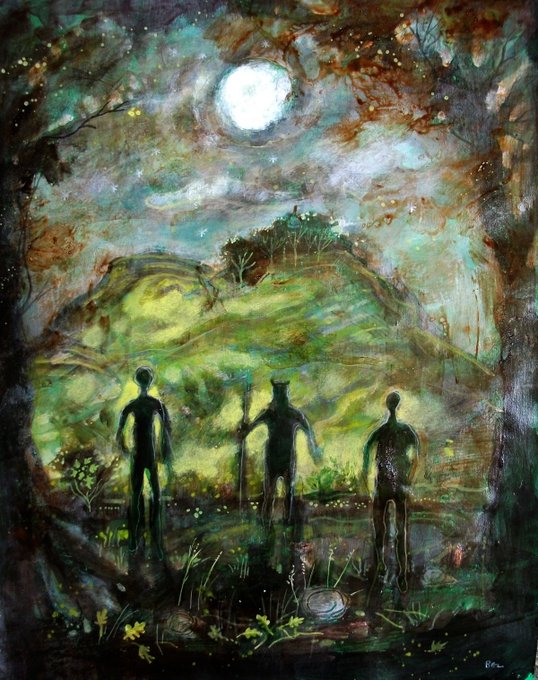
Guardians of The Barleycorn #FolkloreThursday #painting #davidbezartist


Since today's #FolkloreThursday theme is #harvest for #Mabon & #HarvestFestival have a hell hound that harvests eye's for visions. #folklore #illustration #design


Myths come to life!
Following our last #folklorethursday post, one of our readers took their copy of #mythicalirishbeasts out to the sea and tried searching for the 'Beast Jasconious'!
#irishfolklore #mythicalmonday
https://t.co/5PoUdAMh7w


Freyja- goddess of fertility, passion, battle and magic. Captain of the Valkyrie. Master of the art of Seidr, which she taught to Odin.
#FolkloreThursday


As a child, the samurai Minamoto no Yoshitsune was exiled to Mount Kurama after his father was assassinated. He learned swordsmanship from the tengu Sojobo and used his skills to avenge his father's death and become a famous warrior hero. #FolkloreThursday #yokai


In Blendasägnen, Blenda of Småland saves her country from invasion by inviting the warriors to a feast. She sees to it that the invaders are plied with alcohol. Alongside her army of women, she kills the men after they fall into drunken slumber. #FolkloreThursday @FolkloreThurs


Before becoming the hero of the Grail quest, Perceval was raised away from court and unaware of his noble blood. As a typical “Fair Unknown,” his heroism shone through nonetheless, and he eventually joined the Round Table fellowship. #FolkloreThursday
Art:Arthur Hacker

Kintaro is a folk hero from Japan. Raised by a mountain witch he had superhuman strength & befriended animals in the mountains. He's depicted here refereeing a wrestling match between a monkey & a rabbit.
#FolkloreThursday
'Moon of Kintoki's Mountain'- Tsukioka Yoshitoshi, 1890.
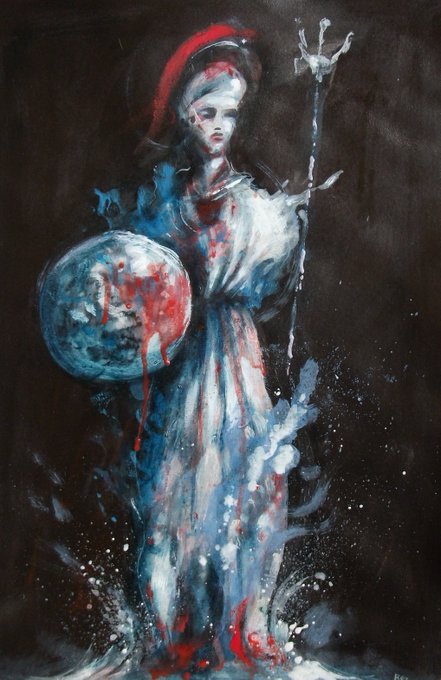

Britannia and Barbarian Lord from the Empires series #FolkloreThursday #painting #empire #davidbezartist

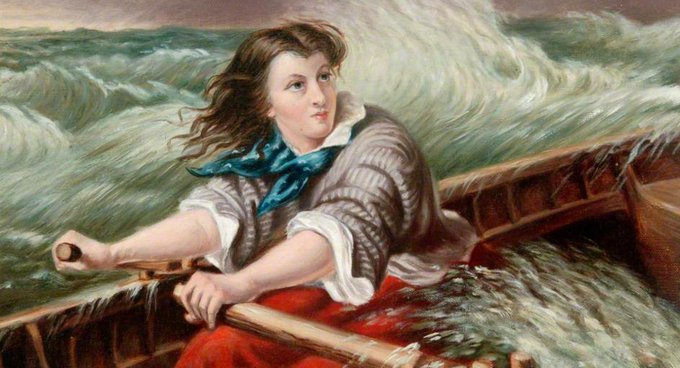
Sept. 1838 22yo Grace Darling and Father rowed 4-man boat from their lighthouse over stormy seas to rescue 9 survivors from ship wrecked on Farne Islands, #Northumberland .She became a national hero & Northumbrian legend #heroines #folklorethursday @NTNorthd_Coast @FolkloreThurs