CretaceousのTwitterイラスト検索結果。 23ページ目


Pastel Paleotober Day 27: Citipati 💙
Citipati lived in the late Cretaceous desert of Mongolia. One Citipati was fossilized with its arms spread over its nest, trying to protect its eggs from a collapsing sand dune and providing evidence of parenting behavior in non-avian dinos

Pastel Paleotober Day 26: Amargasaurus 🦕
Amargasaurus was an early Cretaceous sauropod from Argentina. While not as long as some other sauropods, its neck sported extended vertebral spines which, unlike spinosaurus and dimetordon, are not thought to have supported a skin sail.

Pastel Paleotober Day 25: Tyranosaurus 🦖
The late Cretaceous North American theropod Tyranosaurus is among the most recognizable dinosaurs. While its relatives and ancestors almost certainly had feathers, it may have become bald as it evolved its massive size, similar to rhinos

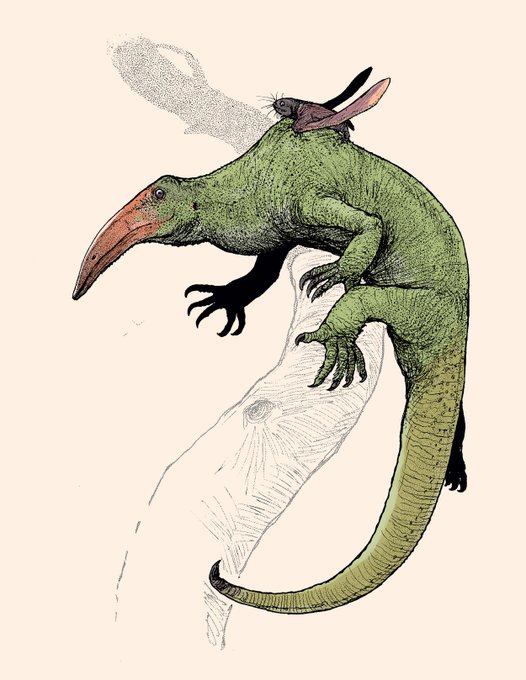
#Drepanomania: Big, secondarily frugivorous drepanosaur and #anurognathid commensal. "What if drepanosaurs endured into the early Cretaceous?" #palaeoart #speculativeevolution


For #FossilFriday and #Croctober, check out this paper on the biomechanics of the Cretaceous South American notosuchian Araripesuchus by Nico Nieto, Federico Degrange, @poldiego & @kalebsellers @CrocHolliday
https://t.co/AdBgr5vNqh
#fossils #paleontology #crocodilia


Introducing Cretapsara athanata, “the immortal Cretaceous spirit of the clouds and waters.”
Unlike other, primarily marine crabs, this 100-million-year-old crab was found in amber, trapped in a blob of resin that fell off a tree. It's the oldest non-marine crab known so far.


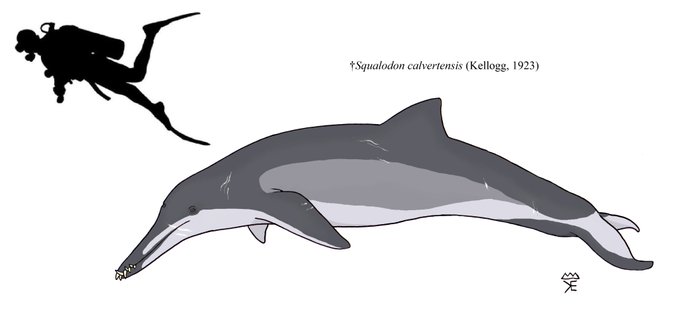
A pair of Paleoart reconstructions: Telmasaurus and Squalodon.
Telmasaurus was a medium sized basal Varanoid (a stem-Monitor lizard if you will) from the Late Cretaceous Flaming Cliffs of Mongolia. Squalodon is a macropredatory Platanistoid whale from the Oligocene and Miocene.

Pastel Paleotober Day 19: Spinosaurus 🍐
Spinosaurus hunted in the banks and rivers of what is now North Africa in the late Cretaceous. At 15-16 meters in length, it was the largest theropod and therefore the largest terrestrial carnivore ever.

Pastel Paleotober Day 18: Triceratops 🌟
Triceratops is from the late Cretaceous North America. Despite common scenes of battles with T. Rex, the distinctive crest and three horns of the Triceratops were likely mainly for courtship and displays. It’s also my favorite dinosaur.


The tables have turned in Late Cretaceous Alberta this #paleoween
Herbivore or not, I doubt ceratopsians would pass up an easy source of calcium and iron.
Submitted for the art contest.

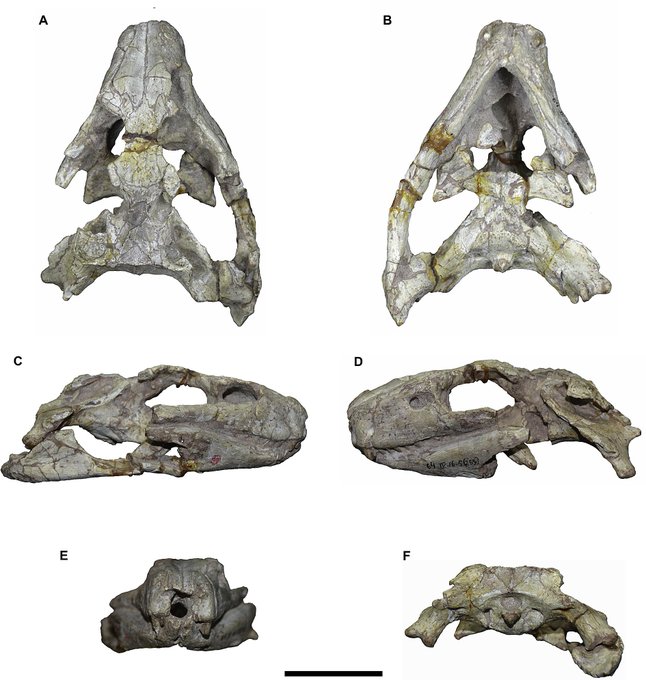
N is for Notosuchus, a terrestrial crocodyliform with heterodont dentition from the Cretaceous of Argentina. It’s possible this croc was omnivorous or maybe even herbivorous. #AtoZcrocs #Croctober #fossils
📸 Barrios et al., 2018: https://t.co/dC3ZLsdixD

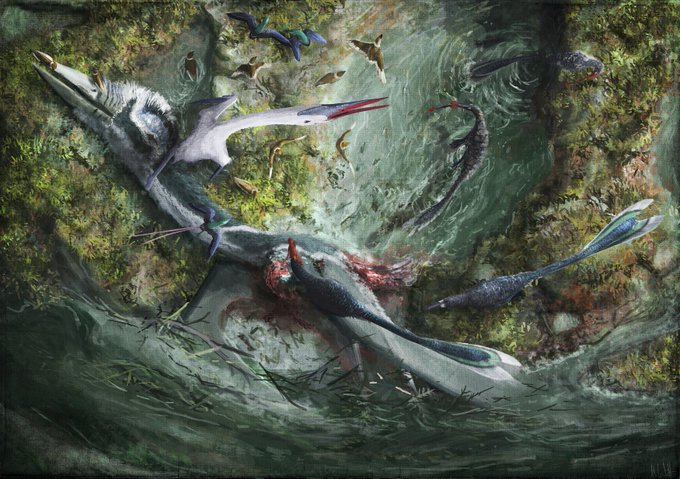
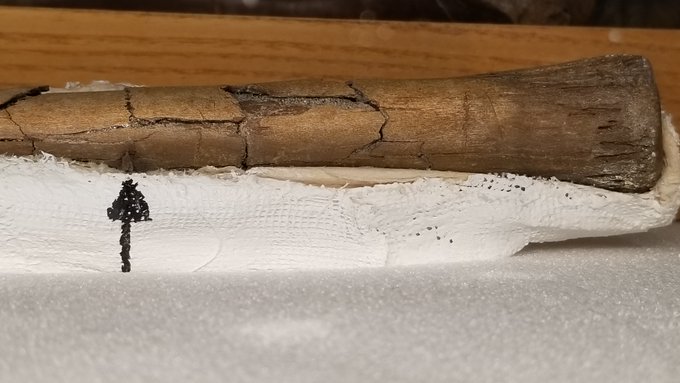
This partial Cryodrakon skeleton is from a juvenile. Adults may have had a 10-metre wingspan. The tibia has tooth marks and a broken Saurornitholestes tooth embedded in it, the first of its kind in a Cretaceous fossil, evidence of scavenging. Art © @MarkWitton.

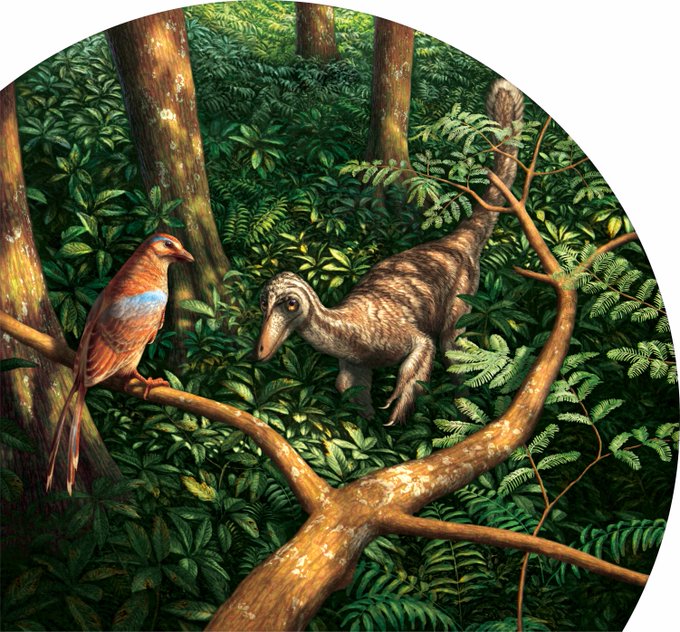
77 MYA, Late Cretaceous: Two dinosaurs, Troodon (on the ground) and Avisaurus (in the tree) eye one another. They are both members of the Eumaniraptora – a related group that includes the “raptor” dinosaurs and all birds.

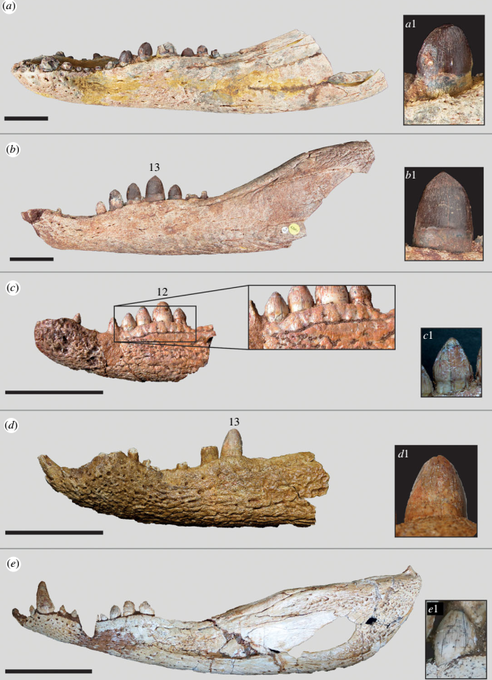

🐊Welcome to #Antaeusuchus taouzensis, a new "peirosaurid crocodyliform from the Mid-Cretaceous Kem Kem Group of Morocco", which reveals data about the diversity of Gondwanan notosuchians. Paper from Nicholl and coleagues - https://t.co/RrjNdURhqD #Paleontology


Sobre la presencia de #aves gigantes en #LoHueco (#Cretácico Superior, #Cuenca) en las #XXXVIJornadasSEP a cargo de @frco_ortega
https://t.co/0PeY58yyJq
#Cretaceous #dinosaurs


First image is a wonderful illustration by the very talented artist @SergeyAtrox1. Long ago on the ancient island land mass of Laramidia in North America, during the Late Cretaceous Period. In the long lost ancient swamp's of the southwest, a lone bull Sierraceratops turneri is


@susuki_kareno I want to see the Kem Kem beds during the Cretaceous. It would've been a fisherman's dream come true. It used to be home to fish so large that they were preyed upon by Spinosaurus.


@immaterialIgirl kenji and his pet pigeon named garbanzo
#campcretaceous #jwcc #kenjikon

Pastel Paleotober Day 8: Sinosauropteryx 💜
Sinosauropteryx was a small, carnivorous dinosaur from northeast China in the early Cretaceous. Fossilized traces of its fuzzy coat showed that feathers were not unique to birds and may have been common among theropods at the time.