eoceneのTwitterイラスト検索結果。 5ページ目


Remingtonocetus is an early whale that lived during the Eocene.
(Credit: @nixillustration)


I meant to have this ready for #WorldFrogDay but oh well. A giant Eocene frog eats a penguin in what will one day be southern Chile. Based on fragmentary remains of a frog maybe 60 cm from snout to vent- quite a bit bigger than Beelzebufo! Also... salt tolerant, perhaps, maybe?

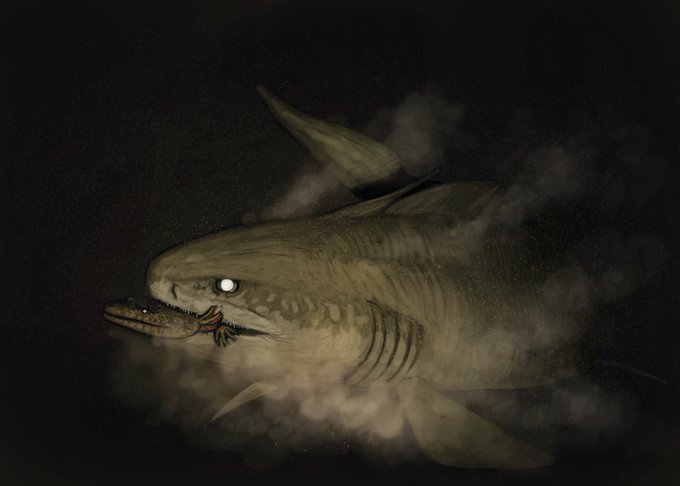
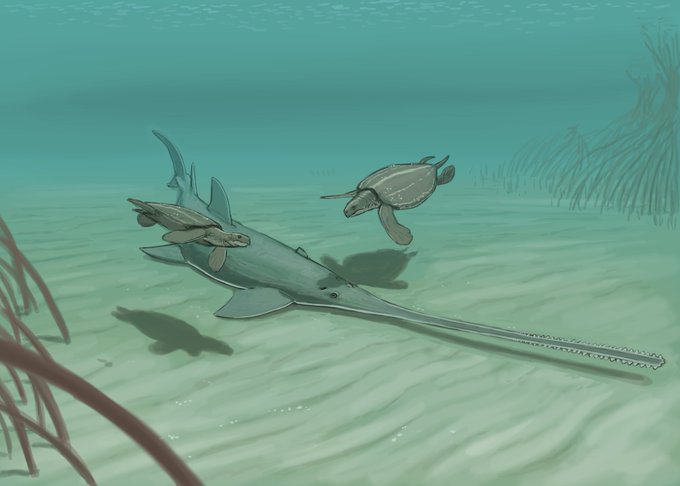


Results from the third #FossilFishWeek #paleostream
Triobus, Propristis, Promyliobatis and Cervifurca
#paleoart #fish #sharks #eocene #sketches #sciart #scicomm #rays


Two nocturnal Palaeotherium magnum (Ancient beast) begin their search for food after a quick drink. An extinct genus of ungulate known from the Middle Eocene to Early Oligocene Epochs (Lutetian to Rupelian Ages 44.5-33.6 MYA) and discovered in France, Germany, Spain


Time to take part in #FossilFishWeek- fashionably late, of course!
Diplomystus dentatus, a predatory clupeomorph fish known from Eocene deposits. Fossils occasionally show this fish with large prey protruding from it's mouth, presumably choking to death and becoming fossilized.


Sarkastodon mongoliensis, from the Eocene of Inner Mongolia and known only from the skull, had teeth made for crushing bones


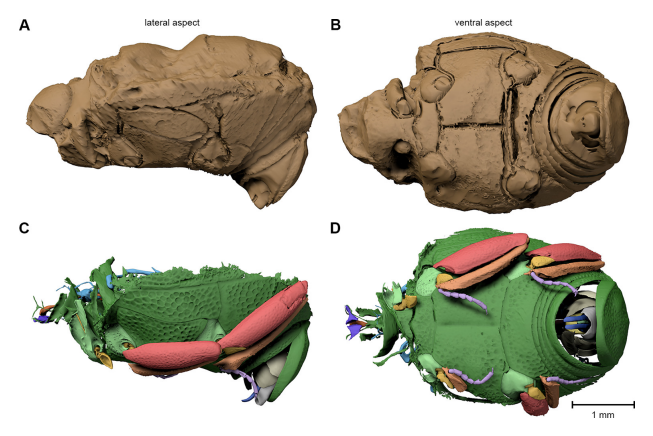
@CentralCenozoic The Eocene-Oligocene Quercy Phosphorites Formation in France for its incredible 3D preservation.


Anatomie cranienne d’Andinodelphys cochabambensis, un stem-métathérien du Paléocène inférieur de Bolivie.
#Mammalia #FossilFriday #Paleontology #CranialAnatomy #Phylogeny #Palaeocene
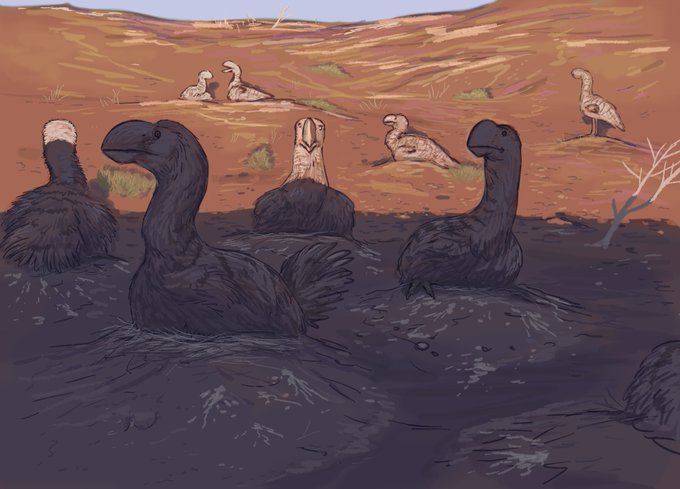


Results from the #paleostream!
Gastornis, Antarcticarcinus and Lyrarapax.
#paleoart #birds #eocene #arthropod #ice #art #cambrian #sciart


So, about horses that don’t look like horses: Propalaeotherium, one of the tiny Eocene equids. A wanderer of forest floors, more or less similar to today’s chevrotains and pacas.

Another to my favorite ancestor of whales, Ambulocetus natans (Walking Whale). Think of it as a crocodile-otter from the early Eocene about 50 MYA. It was thought to have lived in brackish estuaries of what is now Pakistan. Illustration by Rebecca Dart. 🤓🐉


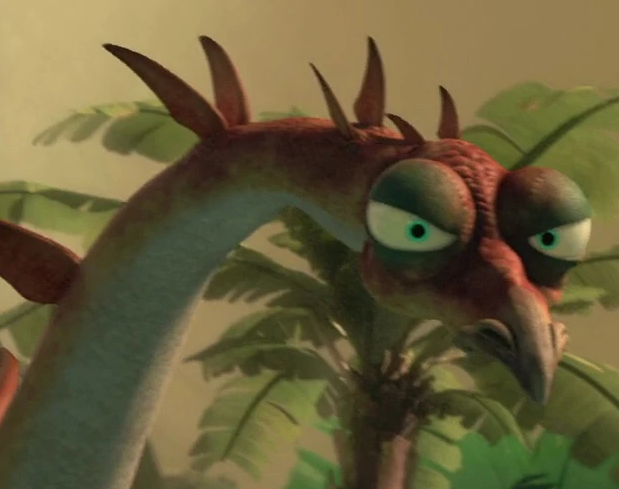

While some Thyreophora are either carnivores or omnivores now, some have still retained their herbivorous diet. This implies that the families of Stegosaurids and Ichthyostegids may have got separated very early on, perhaps way back in the Eocene.


The oldest bear dogs lived during the mid-Eocene and probably looked something like Gustafsonia, which carries the hallmarks of a small, forest-dwelling generalist. Gustafsonia was found in Texas, pointing to a North American origin for Amphicyonidae.
(Coluberssymbol)

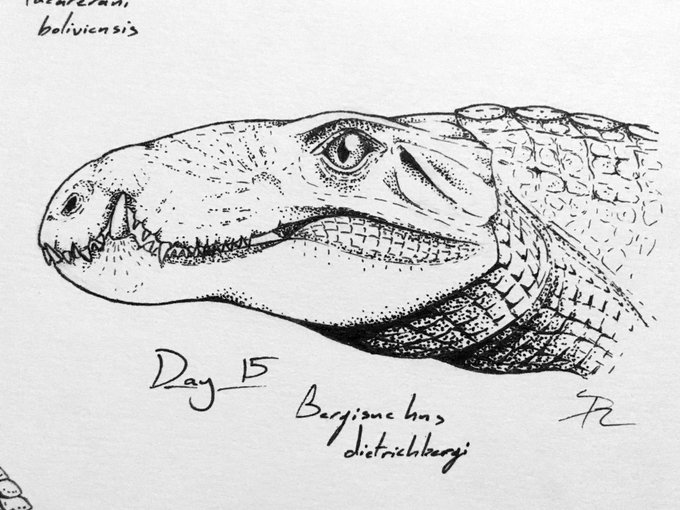
Onto sebecids and co. for #Croctober #Inktober Day 15, a mostly Cenozoic group of terrestrial crocs. The group is famously from South America, but little (~1.5 m) Bergisuchus, with its tiny teeth & one big 'canine' here was from Eocene Europe! (Including the Messel pit!)


Felt the urge to show appreciation to yet another group of Afrotherians, the Sirenians (dugongs and manatees) . This time I present to you the earliest member of Sirenia, meet Prorastomus from the Early Eocene of Jamaica. Sirenian evolution is quite interesting
#paleontology


Since Hyraxes are very awesome. I present to you yet another extinct Pliohyracid. Meet Antilohyrax, a hyrax from the Late Eocene of Fayum, Egypt. A hyrax that resembled a gazelle, had tusks and a low metabolism for an animal its size. It was a cursorial browser.
#paleontology


"Redescription and phylogenetic affinities of the caimanine Eocaiman cavernensis (Crocodylia, Alligatoroidea) from the #Eocene of #Argentina" by @PedroLGodoy et al in Papers in #Paleontology (@ThePalAss)
https://t.co/5GCqurWHeH
#crocodile #croctober #caimaninae

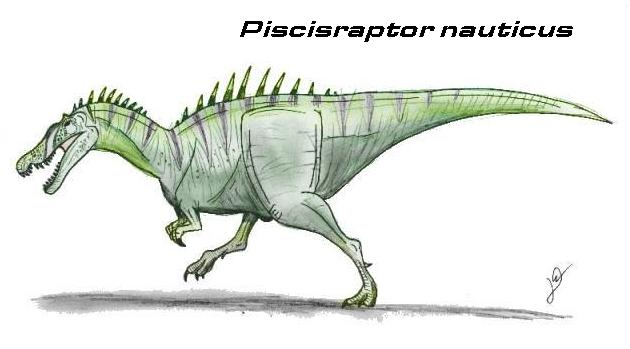
@MetTiinA Maybe some of the extinct animals of Spec? Like the Eocene spinosaurid (I guess that could be another type of dinosaur).


Great new Palaeontologica Electronica publication by Aime Rankin, Bob Emory, and Rob Asher: https://t.co/i1L3Y2OdWt. Beautiful @NMNH specimens of Eocene fossil rodents archived on MorphoSource: https://t.co/UoFXdXjmHZ