
NASAさんのイラストまとめ
@NASAFollow @NASAさんをフォローする
フォロー数:119 フォロワー数:92109099


Are you living your best lava life? 🔥55 Cancri e is the best vacation spot in the galaxy — it’s engulfed in a global ocean of lava! Print out the official 55 Cancri e travel poster to show off your favorite vacation spot 😎https://t.co/GzQVOGB7zG

Arctic weather is plunging into North America. 🌡️ The culprit is a familiar one: the polar vortex.
Seen here is a model using @NASAEarth science + other satellite measurements of temperature, moisture, wind speeds and directions, and other conditions: https://t.co/KGs3bbODFD
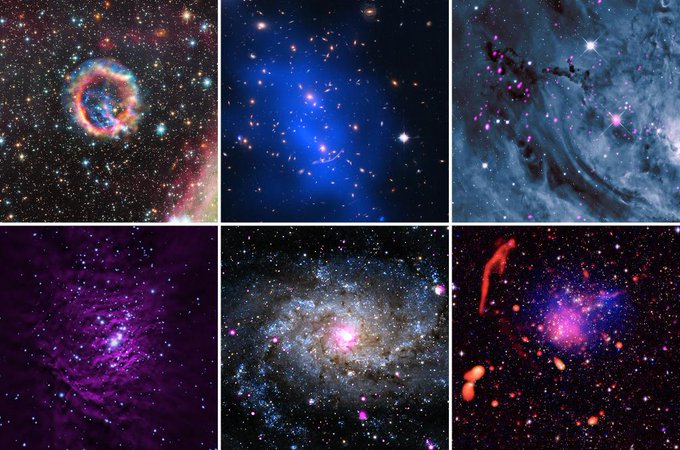
This is the season of celebrating and the @ChandraXRay team has prepared a platter of cosmic treats. This selection represents different types of objects -- from relatively nearby exploded stars to extremely distant & massive clusters of galaxies. Explore: https://t.co/8SQSLLfmRH
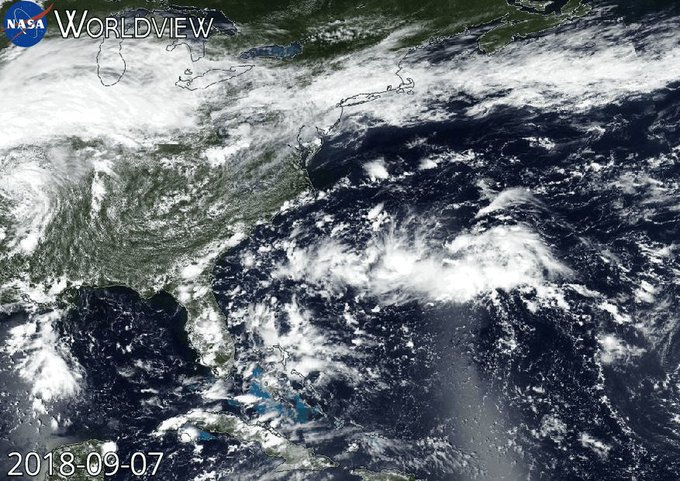
Using our @NASAEarth satellites, we've been tracking and monitoring #HurricaneFlorence as it inched across the Carolinas and farther inland. We're using all resources to keep disaster responders informed with the latest information to assist in decisions: https://t.co/fF8dlvvioU


The catalog of images named after French astronomer Charles Messier includes some of the most fascinating astronomical objects that can be observed from Earth’s Northern Hemisphere. Take a closer look at images captured by our @NASAHubble telescope: https://t.co/C3uiTfhts4.


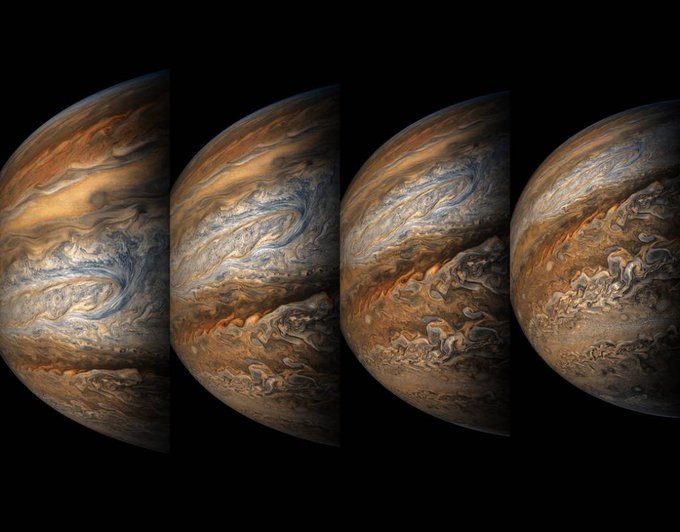
In Greek & Roman mythology, Jupiter drew a veil of clouds around himself to hide his mischief. His wife, the goddess Juno, was able to peer through the clouds & see his true nature, the same way @NASAJuno spacecraft observes planet Jupiter. Take a look: https://t.co/KlnifpNCPW

Behold: see galaxies like never before! Astronomers have used the unparalleled sharpness & spectral range of the @NASAHubble telescope to create the most comprehensive, high-resolution ultraviolet-light look at nearby star-forming galaxies. Take a look: https://t.co/QEkR0EaRSp
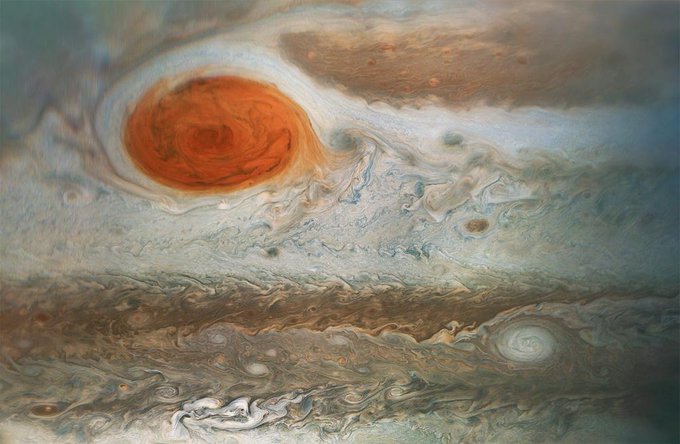
Jupiter’s Great Red Spot — Spotted! This image of the gas giant planet's iconic Great Red Spot and surrounding turbulent zones was captured by @NASAJuno in three separate images taken on April 1. Details: https://t.co/MKGsKQ3kiV
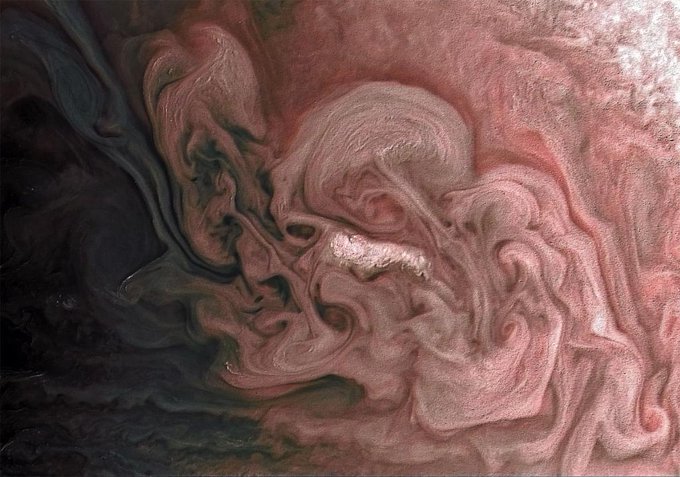
Our @NASAJuno spacecraft captured this close-up view from February 7 of a storm with bright cloud tops on Jupiter. See this rose-colored look at the gas giant planet: https://t.co/wUuNUh15sk

A magnetic power struggle of galactic proportions - new research highlights the role of the Sun's magnetic landscape in the development of solar eruptions that can trigger space weather events around Earth. Find out more: https://t.co/55nsUVjCtE