
NASAさんのイラストまとめ
@NASAFollow @NASAさんをフォローする
フォロー数:119 フォロワー数:92109099


Colors on the wind 🌬️ In this view of Jupiter, @NASAJuno captures swirling clouds in the region of the giant planet’s northern hemisphere. Citizen scientist Björn Jónsson created this enhanced-color image using data from the spacecraft's JunoCam. Zoom in: https://t.co/ugXHRDDvzb


Sit back and take a 🦅birds eye journey around the world, from burning lava fields in Iceland, to converging rivers in Brazil, salt lake beds in Australia, and fog buried in snow-capped mountains of Vancouver. Sink in: https://t.co/X5DBYi8vUS

Are you in love with our solar system? We don’t blame you. We designed a poster set that showcases the beauty of our planets, moons, comets, and asteroids — with optional orbit diagrams and information on the back. Explore our galactic neighborhood: https://t.co/Vcjpqh39cz

It's #StarWarsDay. #MayThe4thBeWithYou. Do you know more about the Milky Way, or a galaxy far, far away? Test your knowledge and discover if you're a Padawan … or a Jedi Master in this quiz that challenges what is fact or fiction across the universe: https://t.co/ZjkjHIaXit
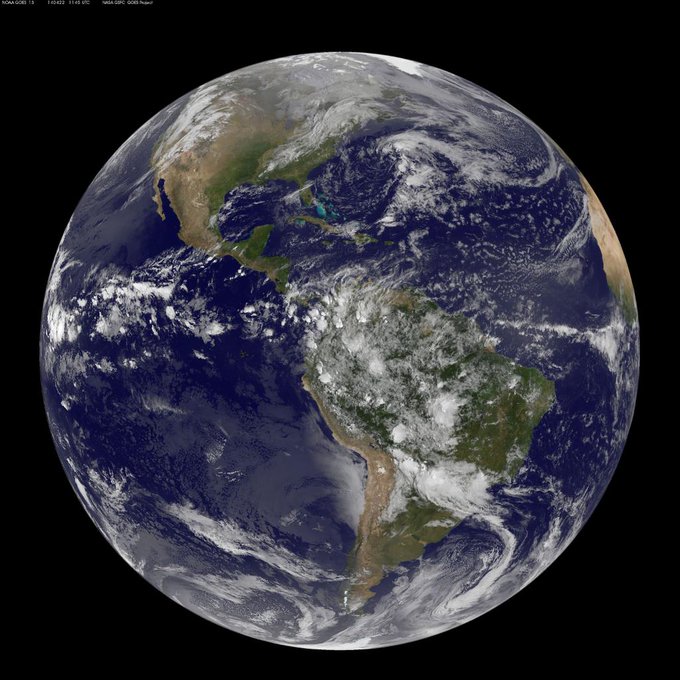
We know you love Earth, but how much do you know about it? 🤔 When the solar system settled into its current layout about 4.5 billion years ago, gravity pulled in swirling gas & dust to form Earth. Learn more about our home planet for #EarthDay: https://t.co/GSuj5jyDMm
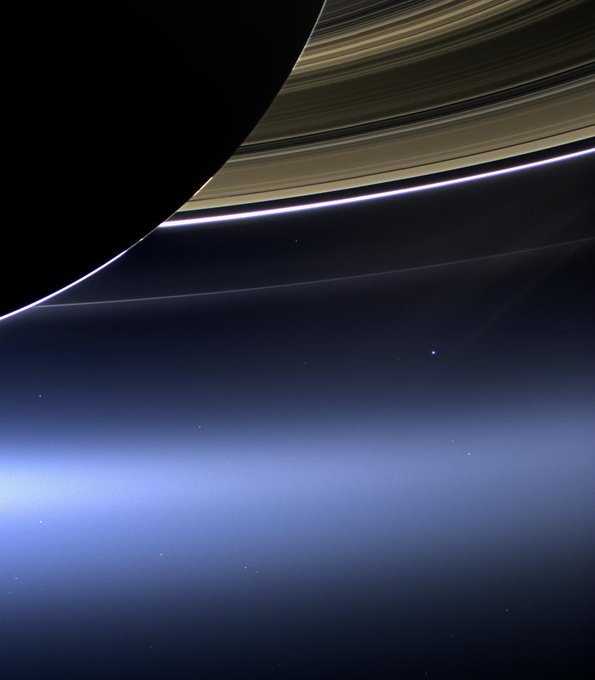
When viewed across the solar system, Earth is just a speck in the cosmos. Images taken of Earth from missions such as @OSIRISRex & @CassiniSaturn remind us of how precious our home planet is. View more images of Earth from afar & celebrate #EarthDay: https://t.co/nGSiJ8MXSs


Storms that stir sediment like watercolors. Chunks of ice that arrange like mosaic tiles. And swaths of desert sand that layer like oil paint. We have compiled a book of awe-inspiring @NASAEarth satellite images. Discover the beauty of our home planet: https://t.co/Qsra6sDaLy

For 3.5 years, our @NASADawn spacecraft explored mysterious Ceres, a dwarf planet between Mars and Jupiter.
Now, scientists create experiments with Dawn's data to study Ceres — including its famous bright spots. How to DIY planetary materials in the lab: https://t.co/9fKD9zD5zN

What’s better than bubbles? Superbubbles in space! @chandraxray data combines w/ @NASAHubble optical data to reveal a pair of balloon-like regions in a galaxy 67 million light yrs from Earth. Learn about superbubbles' possible connection to cosmic rays: https://t.co/ZrZD34SiZw


Sit back and take a 🦅birds eye journey around the world, from burning lava fields in Iceland, to converging rivers in Brazil, salt lake beds in Australia, and fog buried in snow-capped mountains of Vancouver. Sink in: https://t.co/crTJ75IQ3z