
NASAさんのイラストまとめ
@NASAFollow @NASAさんをフォローする
フォロー数:119 フォロワー数:92109099

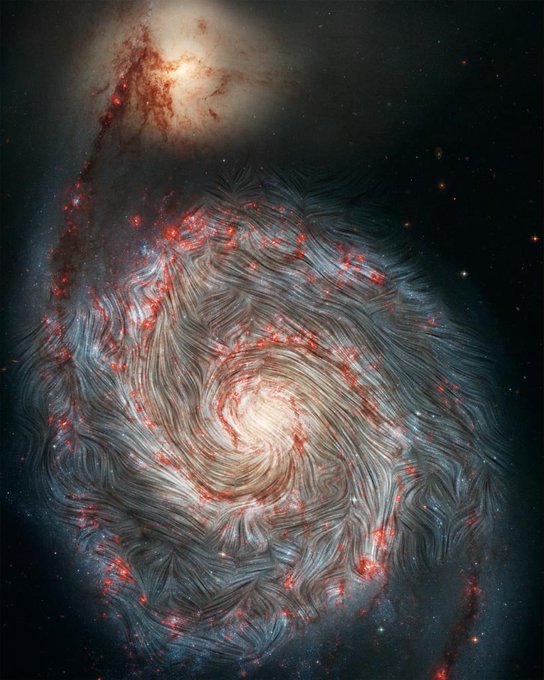
Our @SOFIATelescope's infrared gaze reveals that magnetic fields in the outskirts of the Whirlpool galaxy don't follow an orderly structure. Star formation, and a neighboring galaxy, may be causing the chaos: https://t.co/mMJAJ2jjDj


Observing our universe in different kinds of light 🌌
Each of these images combines data from our @ChandraXray observatory with data from other missions. How this "multiwavelength" approach helps astronomers understand objects in space: https://t.co/XLQjmbQxdv

Using satellite data on the landfall of Hurricane Laura, our @NASAEarth Applied Sciences Disasters Program is working to aid in the response. The team creates and distributes information to help response agencies prepare and manage recovery efforts: https://t.co/hyYQiRRpJD

A monstrous cloud of hot material exploding from its surface is most likely what caused the supergiant star Betelgeuse to dim last fall, @NASAHubble/@ESAScience observations suggest.
Our @NASASun spacecraft STEREO witnessed more odd behavior this summer: https://t.co/gvUxgTtOif

Taking advantage of a total lunar eclipse, astronomers using @NASAHubble have detected ozone in our atmosphere.
Why's this important?
🔭 Researchers can now use this new method – and space telescopes – to continue the search for life in our universe: https://t.co/scFEfdz66o
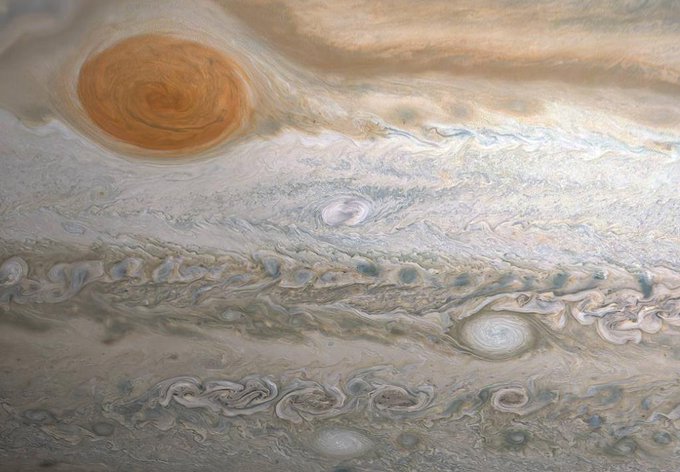
While Jupiter's Great Red Spot has churned in the planet's atmosphere for many years, the feature at the center of this @NASAJuno image is brand new. Called "Clyde's Spot," the storm named after its discover, amateur astronomer Clyde Foster. https://t.co/50Upkb7VET
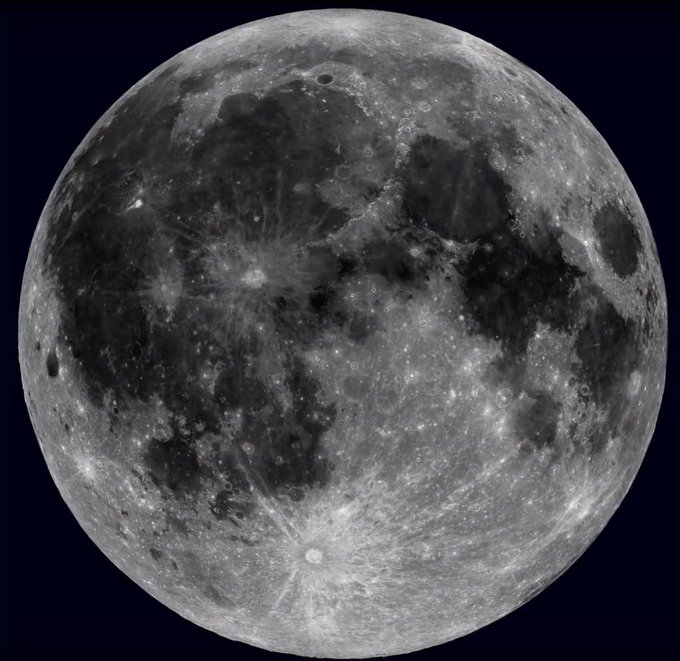
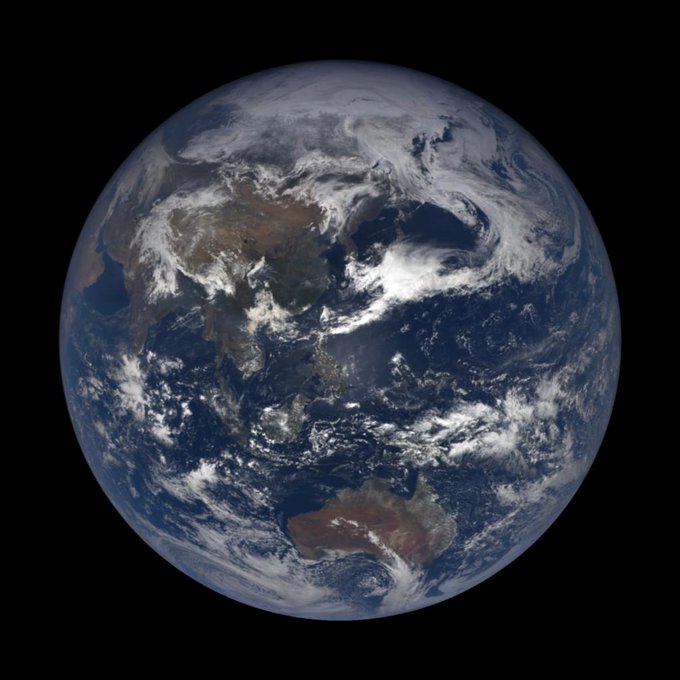


Space news, delivered! 📩
Join us for weekly updates on our #Artemis Moon program! Plus discover the latest on Earth, the Solar System and beyond — all delivered right to your inbox. https://t.co/MyG37QzGhO
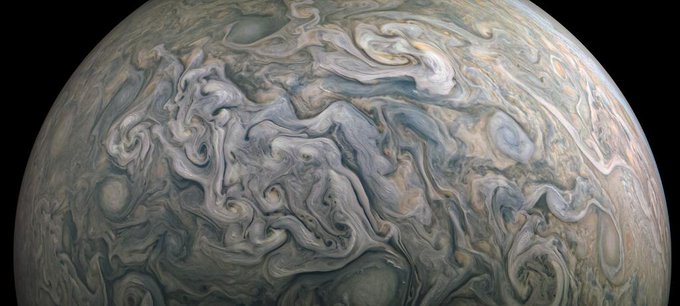
What do you see in Jupiter's clouds? 🐙? ☕ ?
@NASAJuno photographed the giant planet's swirling cloud tops during an April 10 flyby. The image was then processed by citizen scientist Kevin M. Gill: https://t.co/NUTNgL4C5D

Up for some virtual cloud watching?
What do you see in Jupiter’s hazy atmosphere? ☁️ ☁️ ☁️
Our @NASAJuno mission captured this look at Jupiter’s tumultuous northern regions on Feb. 17, 2020. Image processed by citizen scientist Gerald Eichstädt: https://t.co/C9mDmMhhyQ